Playa de Amió, localización

Icono Español. Icon Spanish La playa de Amió está situada en la localidad de Pechón, perteneciente al municipio de Val de San Vicente. El viaje se realiza por autovía y finaliza por carretera nacional. Se muestran a continuación como puntos de partida Oviedo, Palencia, Santander y Bilbao.

Covachos Beach, localization

Icono Inglés. Icon English The beach of Amió is placed in the locality of Pechón, belonging to the municipality of Val de San Vicente. The trip is realized by motorway and finishes by national road. Shown below as starting points Oviedo, Palencia, Santander and Bilbao.

Icono español-inglés. Icon Spanish-English Localización/Localization

Oviedo,  Playa de Amió: LocalizationPalencia,  Playa de Amió: localizationBilbao,  Playa de Amió: localizationSantander, Amió: localization

Share

Playa de San Juan de la Canal, acceso

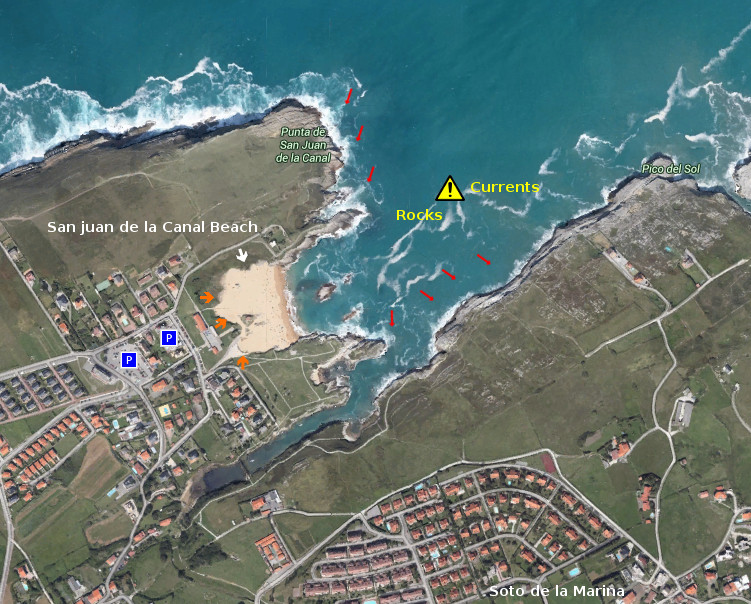
Icono Español. Icon Spanish. Playa de San Juan de la Canal La Playa de San Juan de la Canal está situada en la localidad de Soto de la Marina, perteneciente al municipio de Santa Cruz de Bezana. Es una pequeña playa emplazada en un entorno rocoso, al abrigo del Mar Cantábrico. Su fondo marino arenoso se mezcla con rocas, presentes en la zona. Dispone de varias zonas de aparcamiento anexas a la playa. Existen varios puntos de entrada.

San Juan de la Canal Beach, access

Icono Inglés. Icon English. Playa de San Juan de la Canal The Beach of San Juan of the Canal is placed in the locality of Soto de la Marina, belonging to the municipality of Santa Cruz de Bezana. It is a small beach located in a rocky environment, sheltered by the Cantabrian Sea. Its sandy sea bed is mixed with rocks, which are present in the zone. It has several zones of parking near to the beach. The access has several points of entry .

Icono español-inglés. Icon Spanish-English. Playa de San Juan de la Canal Acceso/Access

Access: San Juan de la Canal beach

Icon close Sponsor

Share

Playa de San Juan de la Canal, localización

Icono Español. Icon Spanish La Playa de San Juan de la Canal está situada en la localidad de Soto de la Marina, perteneciente al municipio de Santa Cruz de Bezana. El viaje se realiza por autovía y finaliza por la carretera nacional CA-300 (oeste) ó la CA-231 (este). Se muestran a continuación como puntos de partida Oviedo, Palencia, Santander y Bilbao.

San Juan de la Canal Beach, localization

Icono Inglés. Icon English The Beach of San Juan de la Canal is placed in the locality of Soto de la Marina, belonging to the municipality of Santa Cruz de Bezana. The trip is realized by motorway and finishes for the national road CA-300 (west) or CA-231 (east). Shown below as starting points Oviedo, Palencia, Santander and Bilbao.

Icono español-inglés. Icon Spanish-English Localización/Localization

Oviedo, Playa de San Juan de la Canal: LocalizationPalencia, Playa de San Juan de la Canal: localizationBilbao,  Playa de San Juan de la Canal: localizationSantander,  Playa de San Juan de la Canal: localization

Icon close Sponsor

Share

Carretera de la costa. I

Icono Español. Icon Spanish La borrasca, con el paso de los días, se desplazó hacia la costa cantábrica. El temporal, que habitaba en alta mar, mantuvo a la flota pesquera amarrada a puerto. Sobre Cantabria arreciaban las lluvias con tal intensidad que daba la impresión de no tener final. El jueves el clima descansó, apareciendo nubes bajas y claras. El día permaneció nublado. En las noticias predecían la llegada de un anticiclón.

Habíamos quedado a las nueve de la mañana en la segunda Playa del Sardinero. Después de cargar el equipo, me dirigí hacia las playas. La entrada a Santander registraba el transito habitual de un día laboral. Llegando a la rotonda, que se encuentra contigua al Parque de la Marga, iba apareciendo la Darsena de Maliaño; ocultada parcialmente por los edificios de entrada a la capital. Los barcos pesqueros, atracados en el puerto, se disponían en fila. Juntos, entre ellos y el balanceo provocado por el estado del mar, formaban un todo con sus partes. Movimiento rítmico y libre que evocaba en mi cabeza antiguas historias de pescadores disfrutadas en la infancia. Gente yendo hacia la lonja de pescado, marineros revisando los equipos, y un movimiento de algunas personas que desperezadas parecían ansiar recuperar los días inhábiles que causó el temporal. Avanzando por la carretera, dejando atrás la Biblioteca Central de Cantabria, apareció la parada del Ferry que llega de Playmouth; a su izquierda los Jardines de Pereda continuaban en obras. Atajando por el Túnel de Tetúan, llegué al Sardinero.

El final de la carretera, es esta zona, termina en una rotonda que da acceso a los restaurantes y hoteles que con ella se anexan. Comienza aquí un paseo que se prolonga a lo largo de unos kilómetros, siendo la primer parada el Palacio de la Magdalena. El oleaje sufrido los días previos causo desperfectos en negocios y bajos cercanos. El arenal moldeado por la tempestad cambio su forma, reduciendo el volumen de arena en la playa que fue dispersado en las zonas próximas. La policía local había acordonado las áreas devastadas. Charcos de agua cubrían la carretera y el adoquinado. Las ramas rotas de los árboles hablaban de las dimensiones de la borrasca. Bajé del coche con cara de perplejidad. Un señor, que regresaba con su periódico, comentó: «niño, la fuerza del cantábrico, esto siempre ha ocurrido. Tan antiguo como el mundo». Se fue alejando con una sonrisa, yo asentí con una mueca.

Junto a un banco, apoyados, estaban los colegas Dani e Irne. Después de saludarnos, permanecimos en silencio durante unos minutos. Tiempo después llegó un camión, con personal del ayuntamiento, para retirar los desperfectos. En Cabo Menor las olas chocaban contra las rocas proyectando una columna de agua blanca que se elevaba varios metros. En la playa las olas que llegaban rompían irregularmente cubriendo con un manto de espuma las zonas útiles para practicar surf. Al mediodía, con la pleamar, las condiciones iban a mejorar. Después de charlar un buen rato y vivir las sensaciones del entorno, fuimos a desayunar.

Coast Highway. I

Icono Inglés. Icon English The tempest, with the nature of the days, moved towards the Cantabrian coast. The temporary, which was living far from the coast, forced the fishing vessels to remain docked at port. On Cantabria the rains were growing worse with such an intensity that was giving the impression of not having end. On Thursday the climate rested, appearing low and clear clouds. The day remained cloudy. In the news it was predicting the arrival of an anticyclone.

We had stayed at nine o’clock in the morning in the second Beach of the Sardinero. After loading the equipment, I went towards the beaches. The entry to Santander was registering the habitual traffic of a labor day. Coming to the roundabout, which is contiguous to La Marga Park, Maliaño’s Dock was appearing; concealed partially by the buildings of entry to the capital. The fishing ships, were in row. Together, between them and the balancing provoked by the condition of the sea, forming a single thing with its parts. Rhythmic and free movement that evoked fishermen’s former histories that I enjoyed when I was a child. People were going to the fish market, sailors were checking the equipments, and a movement of some persons who seemed to desire and recover the non-working days that the temporary caused. Advancing through the road, leaving behind the Central Library of Cantabria, there appeared the season of the Ferry that comes from Playmouth; to its left side the Pereda Gardens was continuing in works. Taking a short cut by Tetúan’s Tunnel, I came to the Sardinero.

The final of the road, it is this zone, ends in a roundabout that leads to the restaurants and hotels that with it are annexed. It begins here a avenue that extends along some kilometres, being its first point the Palace of La Magdalena. The waves that were lived the previous days caused damages in business and mezzanines. The sandbank molded by the tempest changed its form, reducing the volume of sand in the beach that was dispersed in the next zones. The city police had sealed the devastated areas. Water puddles were covering the road and the paved one. The torn branches of the trees were speaking about the dimensions of the tempest. I went down the car with face of perplexity. A gentleman, who was returning with his newspaper, commented: » kid, the force of the Cantabrian Sea, this always has happened. So ancient as the world «. He was moving away with a smile, I answered with a grimace.

Close to a bank, supported, there were the colleagues Dani and Irne. After greeting ourselves, we remained silently during a few minutes. Time later came a truck, with personnel of the town hall, to withdraw the damages. In Cabo Menor, the waves were hitting against the rocks; projecting a column of white water that was rising several meters. In the beach the waves that were coming were breaking irregularly, covering with a mantle of foam the useful zones to practise surf. To the midday, with the high tide, the conditions were going to improve. After chatting a good moment and living the sensations of the environment, we went to have breakfast.

Icon close Sponsor

Share

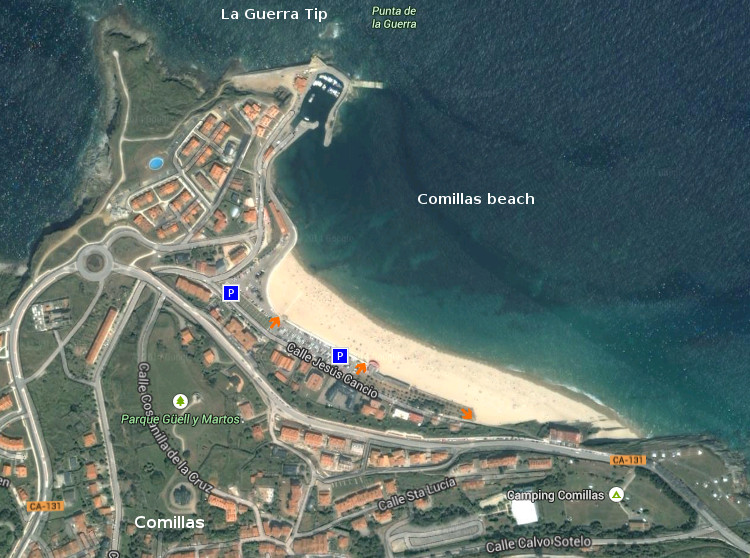
Playa de Comillas, acceso

Icono Español. Icon Spanish. Playa de Comillas, La playa de Comillas está situada en el municipio de Comillas, en la costa occidental de Cantabria. Es una playa urbana, ubicada dentro de la localidad. Está bordeada por un Paseo Marítimo, al que se llega atravesando Comillas. Cuenta con un amplio aparcamiento y varios puntos de entrada al arenal.

Comillas Beach, access

Icono Inglés. Icon English. Playa de Comillas, The beach of Comillas is placed in the municipality of Comillas, in the western coast of Cantabria. It is an urban beach located inside the locality. It is bordered by a promenade, to which you will arrive through the city. It possesses a wide parking and several points of entry to the sandbank.

Icono español-inglés. Icon Spanish-English. Playa de Comillas, Acceso/Access

Acces: Comillas beach

Icon close Sponsor

Share

Playa de Comillas, localización

Icono Español. Icon Spanish La playa de Comillas se encuentra en la localidad de Comillas, ubicada en la costa occidental de Cantabria. El viaje se realiza por autovía , finalizando por la carretera nacional CA-135; desde el este y CA-131 desde el oeste. Se muestran a continuación como puntos de partida Oviedo, Palencia, Santander y Bilbao.

Comillas beach, localization

Icono Inglés. Icon English The beach of Comillas is in the locality of Comillas, placed in the western coast of Cantabria. The trip is realized by motorway, finishing for the national road CA-135; from the east and CA-131 from the west. Shown below as starting points Oviedo, Palencia, Santander and Bilbao.

Icono español-inglés. Icon Spanish-English Localización/Localization

Oviedo, Playa de Comillas: LocalizationPalencia, Playa de Comillas: localizationBilbao, Playa de Comillas: localizationSantander, Playa de Comillas: localization

Share

Carretera de la costa

Icono Español. Icon Spanish El verano ya había traspasado su mitad y el mes de septiembre se acercaba en el calendario. Los anticiclones de la estación estival, ayudados por la estacionalidad del clima veraniego, redujeron la presencia de olas; afectando esto a su tamaño. Desde Junio, las semanas de buenas condiciones se alternaron con otras de menos calidad.

Sentados en una terraza, al atardecer, charlábamos sobre temas variopintos. El mes de Agosto terminaría en una semana con la llegada de una borrasca. Historias y planes se cruzaban en las conversaciones. En el horizonte temporal, la vista fijaba su atención hacia Septiembre. En aquella tarde relajada, acompañada por el ocaso del día, las distracciones abundaban en la reunión. El mar sonaba de fondo, proporcionando un mantra natural y anhelante. Aquellos estímulos parieron la idea de recorrer parte de la costa cántabra en busca de olas, cuando vendrían las mejores condiciones.

Transcurrieron los días ensimismados en su cotidianidad. Consultando las predicciones y mirando al cielo, llegó el mal tiempo. Durante cuatro días estuvo lloviendo, por las noches amainaba. Al principio, el agua apenas registraba su paso por la carretera. Al final, la lluvia refrescó los campos, dotando a estos de un fugaz verdor. El olor a humedad e hierba fresca estaba presente en el paisaje; como un elemento consustancial. Las noticias internacionales hablaban del temporal que estaba sufriendo el sur de Gran Bretaña. En la televisión, las imágenes de grandes olas y el paso de la gran borrasca inundaba los informativos. El otoño anticipaba su llegada y los meteorólogos hacían hincapié en los beneficios del agua recibida, aclarando que la peor parte se estaba dando en alta mar. Llamé a un colega para ir pensando en el recorrido. Preparando cada uno su material, acordamos vernos el próximo fin de semana; al comienzo de las mejores condiciones.

Coast Highway

Icono Inglés. Icon English The summer had already happened its middle and September was approaching in the calendar. The anticyclones of the summer station, helped by the seasonal variation of the summer climate, had reduced the presence of waves; affecting this to its size. Since June, the weeks of good conditions had been alternated with others of fewer quality.

Sat in a terrace, at the end of the afternoon, we talked on various topics. August would end in one week with the arrival of a low pressure. Histories and plans were mixed in the conversations. In the temporary horizon, the sight was fixing its attention around September. In that relaxed evening, accompanied by the sunset of the day, the distractions were abounding in the meeting. The sea was sounding in the background, providing a natural and yearning mantra. Those stimuli gave birth to the idea of crossing part of the Cantabrian coast in search of waves, when the best conditions would come.

The days passed centered in its commonness. Seeking the predictions and looking at the sky, the bad weather came. For four days it was raining, the conditions was subsiding in the nights. Initially, the water scarcely was registering its step along the road. Ultimately, the water refreshed the fields, providing them with a fleeting greenery. The smell of dampness and fresh grass was present in the landscape; as a consubstantial element. The international news was speaking about the temporary that was suffering the south of Great Britain. In the television, the images of big waves and the step of the great tempest was flooding the newscast. The autumn was warning of its future arrival and the meteorologists were emphasizing in the benefits of the received water, clarifying that the worst part was given in the Sea. I called a colleague; to think about the tour. Preparing each one his material, we were agree to meet the next weekend; at the beginning of the best conditions.

Icon close Sponsor

Share

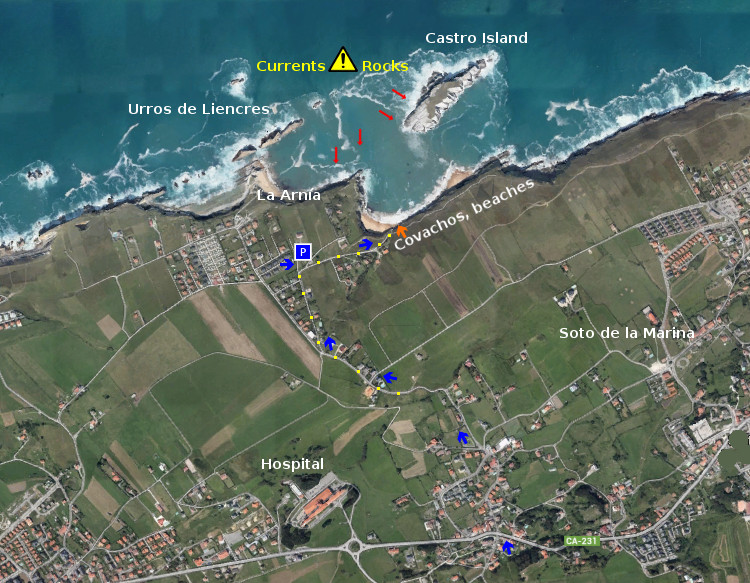
Playa de Covachos, acceso

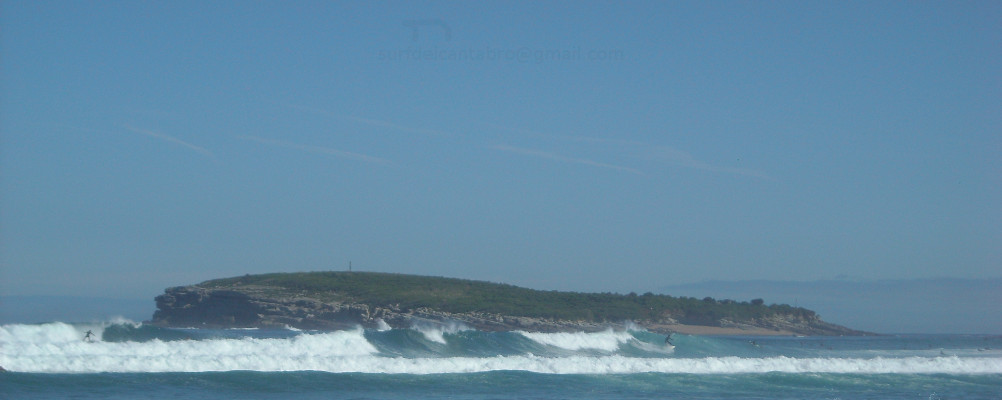
Icono Español. Icon Spanish. Playa de San Julián La Playa de Covachos está situada en la localidad de Soto de la Marina, perteneciente al municipio de Santa Cruz de Bezana. Es una ensenada de gran belleza, ubicada en mar abierto y coronada por la Isla del Castro; que habilita dos playas en la misma zona. El aparcamiento es escaso y alejado de la entrada al arenal. El acceso se hace por medio de una escalera construida sobre el acantilado en su parte más baja.

Consejo: tener precaución por las fuertes corrientes y la fuerza del mar en la zona.

Beach of Covachos, access

Icono Inglés. Icon English. Playa de San Julián The Beach of Covachos is placed in the locality of Soto de la Marina, belonging to the municipality of Santa Cruz de Bezana. It is an inlet of great beauty, located on the open sea and crowned by the Island of the Castro; that creates two zones in the same beach. The parking is scanty and it is removed of the entry to the sandbank. The access is done by means of a stairs constructed on the cliff in his lower part.

Advice: to take precaution as the strong currents and the power of the sea in the zone.

Icono español-inglés. Icon Spanish-English. Playa de San Julián Acceso/Access

Access, Covachos

Icon close Sponsor

Share

Playa de Covachos, localización

Icono Español. Icon Spanish La Playa de Covachos es una cala rocosa creada por la erosión del mar a lo largo del tiempo. Está situada en la localidad de Soto de la Marina, en el municipio de Santa Cruz de Bezana. Al oeste de Santander, mira a mar abierto. El viaje se realiza por autovía y finaliza por la carretera nacional CA-231. Se muestran a continuación como puntos de partida Oviedo, Palencia, Santander y Bilbao.

Covachos Beach, localization

Icono Inglés. Icon English Covachos Beach is a rocky cove created by the effect of the sea through the time. It is placed in the locality of Soto de la Marina, in the municipality of Santa Cruz de Bezana. To the west of Santander, it is in open sea. The trip is realized by motorway and it finishes for the national road CA-231. Shown below as starting points Oviedo, Palencia, Santander and Bilbao.

Icono español-inglés. Icon Spanish-English Localización/Localization

Oviedo, Covachos: LocalizationPalencia, Covachos: localizationBilbao, Covachos: localizationSantander, Covachos: localization

Icon close Sponsor

Share