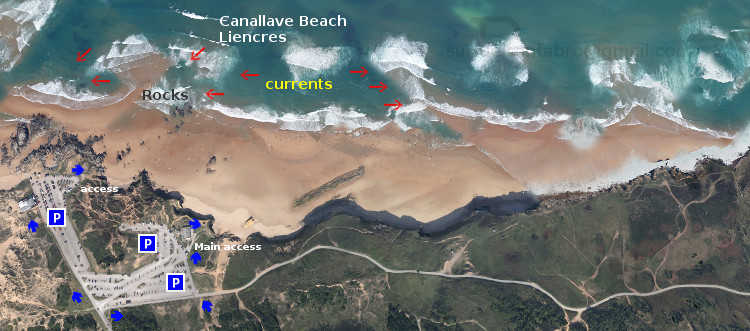
Las olas continuaban llegando, parecían no agotarse. Volver a entrar se tornaba más complicado. El mar apretaba con fuerza hacia la orilla y con el jubilo de las olas nadie se percató del aumento de la marea.
Olas de buen tamaño asomaban en la distancia. Cuando llegaban a nuestra posición superaban los 3 metros, alcanzando los cuatro metros de altura. Esperando la ola adecuada, charlábamos sobre las maniobras con el ruido del oleaje como banda sonora. Las sensaciones que provoca el mar compensaban los días de mar lisa en los que cada uno se había dedicado a otros menesteres. Las series regresaban de nuevo. El viento regaba con gotas de agua rota la superficie del mar. Reanudamos los turnos de olas. El primer surfer que se adelantó, se levantó sobre la tabla, llegó tarde a la ola y se desplomó desde la cima. La velocidad del agua había aumentado.
Un compañero situado a la izquierda consiguió subirse a otra ola. Llegó a la base y giró con rapidez. Cercano a la cresta, fue recorriendo el muro de agua que lo transportaba con velocidad. Ninguna maniobra fue posible, sólo lo que el mar permitía. Se perdió en la distancia, finalizando su recorrido.
Sentados sobre las tablas eramos mecidos por el movimiento del oleaje. Colocados transversalmente seguíamos hablando. Un compañero comentó que el mar se había endurecido. Otro chico detrás de mí preguntó que había dicho. Me giré para responder. Era imposible escuchar nada a cuatro metros de distancia. Una gran masa de agua se nos echó encima. A medio camino de su cresta nos sumergimos dentro de la pared de agua para evitar la ola. En el otro lado, el nivel del mar descendía de forma abrupta. Colocado en aquella depresión marina volvimos la mirada hacia lo próximo que vendría. Al mirar a mi derecha observe como los ojos de otro compañero se disparaban hacia el horizonte. Un sonido sordo y metálico me hizo mirar hacia el frente. Una nueva ola llegó. Tumbado sobre la tabla, la vi elevarse y ocultar el cielo. El sonido envolvía todo el espacio. Una gran masa de agua, que pasaba los tres metros, se disponía a romper. Buceé otra vez. En dirección hacia las profundidades sentí el golpeo de la ola sobre la tabla, que se había quedado en la superficie. Tiró de mí y respiré de nuevo.
Big Sea. Part B
 The waves were continuing coming, them seemed not to become exhausted. The arrival to the best zone again was becoming more complicated. The sea was pushing strongly towards the shore and with the joy of the waves nobody noticed the increase of the tide.
Waves of good size were beginning to appear in the distance. When them were coming to our position, them had overcome 3 meters, reaching four meters of height. Waiting for the suitable wave, we were chatting on the maneuvers with the noise of the surge as sonorous band. The sensations that the sea provokes were compensating the days of smooth sea in which each one had devoted himself to other occupations. The series were returning again. The wind was watering with torn water the surface of the sea. We resume the rotating shifts for the waves. The first one that went forward, got up on the board, was late to the wave and collapsed from the top. The speed of the water had increased.
A colleague placed to the left side managed to be raised to another wave. It came to the base and turned with rapidity. Near to the crest, he was crossing the water wall that was transporting him quickly. None maneuver was possible, only what the sea was allowing. He got lost in the distance, finishing his trip.
We sat on the boards, that were rocking by the movement of the surge. We placed transversely and continued speaking. A companion commented that the sea had hardened. Another boy behind me asked about the conversation. I turned to answer. There were unless four meters of distance between us and it was impossible to listen to nothing. A great mass of water was raised over us. In the middle of its height we submerge inside the wall of water to avoid the wave. In the other side, the level of the sea was descending abruptly. When we were in that low level, we turned to look towards the next colossus that would come. looking at the right, I observed as the eyes of another companion were going off towards the horizon. A deaf and metallic sound made me look at the front. A new wave came. Down, on the board; I saw it to raise hidding the sky. The sound was wrapping the whole space. A titan of water, which had more than three meters, was preparing to break. I dived again. In direction towards the depths, I felt the throb of the wave on the board, which had remained in the surface. My ankle was struck and I came back up to breath again.

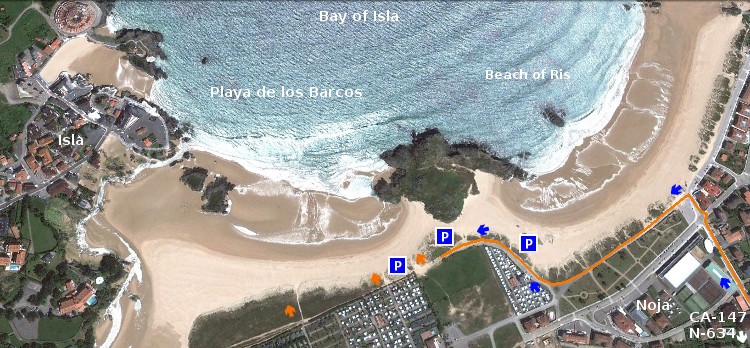
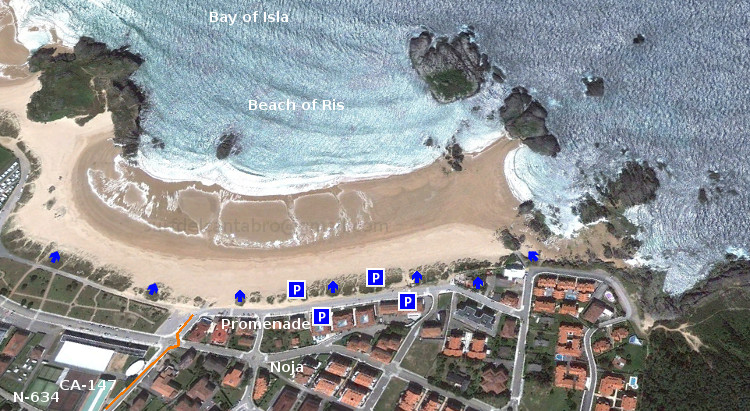
 Acceso/Access