Criterios para elegir un bodyboard

Icono Español. Icon Spanish Elegir un bodyboard no es algo sencillo debido a los parámetros que componen su diseño y a todas las combinaciones que pueden generar. Por ejemplo para 4 factores a tener en cuenta ( que pueden ser muchos más) combinados entre sí generan 256 bodyboards distintos. A esto se suma la gran variedad de fabricantes y que cada uno cuenta con una amplia gama de modelos. ¿ Cómo elegir ? . La principal orientación sobre esta decisión la marca el uso que de él vamos a hacer. Para ello los principales parámetros son los siguientes :

1 – Tallaje.
2 – Partes de un bodyboard.
3 – Materiales.

1 – Tallaje : el sistema de tallas se establece en pulgadas (1 pulgada = 2,54 cm) y nos sirve para conocer que talla es la más adecuada para cada uno. Éste es el criterio básico para elegir un bodyboard. Pues si la talla es grande respecto del surfer, no permite maniobrar. Si por el contrario es pequeña, sólo funcionará con las olas más potentes; perdiendo estabilidad y seguridad.

Separador. DividerIcono Español-Inglés. Icon Spanish-English

Size – length (inch) Height (cm) Weight (kg)
37″ 123-153 cm 28-55 kg
37.5″ 130-155 cm 30-55 kg
38″ 135-155 cm 35-58 kg
38.5″ 138-158 cm 36-58 kg
39″ 137-158 cm 38-58 kg
39.5″ 140-162 cm 40-60 kg
40″ 157-167 cm 42-62 kg
40.5″ 158-170 50-80 kg
41″ 160-173 cm 55-85 kg
41.5 165-179 cm 60-90 kg
42″ 168-183 65-95 kg
42.5″ 170-190 cm 70-100 kg
43″ 172-195 70-105 kg
44″ 175-195 cm 75-130 kg
45″ 175-195 cm 75-130 kg
46″ + 195 cm + 100 kg

Icono separador. Icon divider

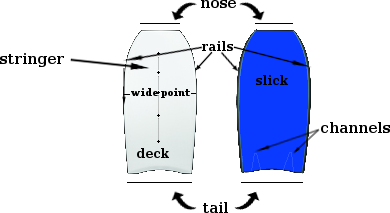
2 – Partes de un bodyboard.

Separador. DividerIcono Español-Inglés. Icon Spanish-EnglishDibujo Partes BodyboardIcono separador. Icon divider

Nose (pico): parte superior. Si es más ancho nos permite situar el peso hacia adelante, para surfear tumbado (prone). Si es más estrecho favorece desplazar el peso hacia atrás, para surfear de rodillas (dropknee).
Tail (cola): parte inferior. Cada tipo de cola está indicado para un tipo de olas y maniobras diferentes. Las dos grandes categorías son : crescent tail y bat tail. Dentro de cada categoría hay muchas variantes. Las principales categorías son :

  • Crescent tail : para olas grandes, el bodyboard se acopla bien a la pared de la ola.
  • Bat tail : aportan mayor maniobrabilidad, pero el bodyboard pierde acoplamiento en la pared de la ola.

Separador. DividerIcono Español-Inglés. Icon Spanish-EnglishTipos  colas de bodyboardIcono separador. Icon divider

Wide point : parte más ancha.

Deck : cara sobre la que se tumba el surfer.

Slick : cara que va en contacto con el agua.

Rails (bordes): bordes laterales del bodyboard, superiores e inferiores. Estos bordes se figuran en forma de ángulo siendo su parte inferior y superior separadas por el punto de inflexión. Cumplen la función de quillas, anclan nuestra trayectoria al camino de la ola, cuando cortamos la ola. Su medidas habituales son: (borde inf.)60/40(borde sup.) y 50/50. Cuanta mayor diferencia existe entre estas medidas hay mayor acoplamiento a la pared de la ola.

Stringer : listón flexible y duro generalmente de carbono. Colocado en el interior verticalmente, para proporcionar mayor resistencia al bodyboard.

Channels (canales) : proporcionan mayor acople a la ola, disminuyen ligeramente la maniobrabilidad.

– Diferencia entre nose y wide point : proporciona mayor capacidad de giro según el valor aumenta.

3 – Materiales.

Los materiales usado para constuir un bodyboard se centran principalmente en tres partes, cada una de ellas tiene una gama de calidades.

  • Slick : (de mayor a menor calidad) surlyng, HDPP, HDPE.
  • Deck : (para gustos)
    • Sealed-air: célula abierta, es más blando.
    • Crosslink : célula cerrada, no absorbe agua y es más rígido.
  • Core : es la parte interna del bodyboard. Las calidades, de menor a mayor; son las siguientes :
    • Dow : blando y pesado, baja calidad.
    • PE (Polietileno) : es más pesado que PP. Adecuado para aguas frías.
    • EFC (Engineered Flexible Core): evolución de PE, mantiene sus propiedades; siendo más ligero y
      totalmente impermeable.
    • PP (Polipropileno) : muy ligero. Adecuado para aguas calientes. Alta calidad.

Nota : tener precaución al colocar el invento (correa elástica de sujeción) para no dañar ninguna parte del bodyboard (stringer).

Resumen: estos son los principales criterios para elegir un bodyboard. Tener en cuenta que la calidad está relacionada con el precio, aunque esto no siempre se cumple. Debido a la durabilidad de un bodyboard quizás es recomendable aumentar la cantidad a invertir, primando calidad y funcionalidades; dependiendo del uso y nuestra frecuencia de surf, pero esta decisión corresponde a la libre elección de cada uno.

Criteria for choosing a bodyboard

icono bandera Reino UnidoTo choose a bodyboard is not something simple because of the parameters that make up its design and all the combinations that can be generate. For example for 4 factors to take into account ( which can be many more) generate 256 different bodyboards. This is compounded by the wide variety of manufacturers and that each one have a wide range of models. How do you choose? . The main guidance on this decision are the place and style that we’re going to play. The main parameters are the following ones :

1 – Sizing.
2 – Parts of a bodyboard.
3 – Materials.

1 – Sizing: the system of sizes settles down in inches (1 inch = 2,54 cm) . It allow us to know the size that is the most appropriate for each one. This one is the basic criterion to choose a bodyboard. If the size is bigger than the ideal one for the surfer, it does not allow to maneuver. If on the contrary it is small, only it will work with the most powerful waves; with less stability and safety.

Size chart. See above.

2 – Parts of a bodyboard.

Bodyboard parts Picture. See above.

Nose (peak): top. When it is width enables us to place the weight forward, to surfing down (prone). The small width of it allow us to place the weight backwards, to surf over the knees (dropknee).

Tail (queue): bottom. Each type of tail is indicated for a kind of waves and different maneuvers. The two major categories are : crescent tail and bat tail. Within each category there are many variants. the main categories are:

  • Crescent tail : for big waves, the bodyboard attaches securely to the wall of the wave.
  • Bat tail : delivering greater maneuverability, but loses the bodyboard coupling on the wall of the wave.

Tails Picture. See above.

Wide point : widest part.
Deck : face on the surfer.
Slick : side to be in contact with water.
Rails : side edges of the bodyboards, upper and lower. These edges are contained in the form of angle being their top and bottom separated by the inflection point. Them play the role of keels, anchored our path to the path of the wave, when we cut off the wave. Its customary measures are: (bottom )60/40 (top) and 50/50. The difference between these measures increase the coupling to the wall of the wave.

Stringer : stick generally flexible and hard, usually manufactured in carbon. Placed inside the bodyboard and vertically, to provide greater resistance for the bugui.

Channels : provide greater union to the wave. Them slightly diminish the maneuverability.

– Difference between nose and wide point : provides more maneuverability according to the increase of the value.

3 – Materials. The materials used to build a bodyboard is focused mainly in three parts, each one of them has a range of qualities.

  • Slick : (from highest to lowest quality) surlyng, HDPP, HDPE.
  • Deck : (to taste)
    • Sealed-air: open cell, is softer.
    • Crosslink : closed cell, does not absorb water and is more rigid.
  • Core : is the internal part of the bodyboard. From lowest to highest quality ; them are the following :
    • Dow : soft and heavy, low quality.
    • PE (Polyethylene) : it is heavier than PP. Suitable for cold waters.
    • EFC (Engineered Flexible Core): evolution of PE, maintains its properties; still more lightweight and
      completely waterproof.
    • PP (Polypropylene) : very lightweight. Suitable for hot waters. High quality.

Note: Use caution when placing the leash not to damage any part of the bodyboard (stringer).

Summary: these are the principal criteria to choose a bodyboard. Bear in mind that the quality is related to the price, though this not always is fulfilled. Due to the durability of a bodyboard probably it is advisable to increase the quantity to invest, giving priority to quality and functionalities; depending on the use and our frequency of surfing, but this decision corresponds to the free choice of each one.
Icon close Sponsor

Share

Isla de Mouro, origen del nombre

Icono Español. Icon Spanish El origen del nombre de Isla de Mouro se remonta al siglo XVIII que es cuando se realiza el primer Atlas Hidrográfico de España. En ese libro se incluían todas las islas de nuestro páis, entre las que se encontraba la que hoy conocemos como Isla de Mouro. Su nombre original era Isla de Mogro, pero debido a un error en la transcripción hecha por el cartógrafo Vicente Tofiño de San Miguel, se registro el nombre Isla de Mouro, que se ha conservado hasta nuestros días.

La palabra «Mogro» designa a una localidad costera cantabra próxima a Santander. Su significado es sinónimo de «castro«, el cual se refiere a poblado fortificado celta, generalmente prerromano. La palabra castro proviene del latín «castrum«, que significa fortificación militar.

Island of Mouro, origin of the name

Icono Inglés. Icon English The origin of the name of the Island of Mouro goes back to the eighteenth century that is when the first Hydrographic Atlas of Spain had been done. In that book were included all the islands of our country. Among the islands, Mouro Island. Its original name was Island of Mogro, but due to an error in the transcript by the cartographer Vicente Tofino of San Miguel, the name of Island of Mouro was recorded and it has been preserved until our days.
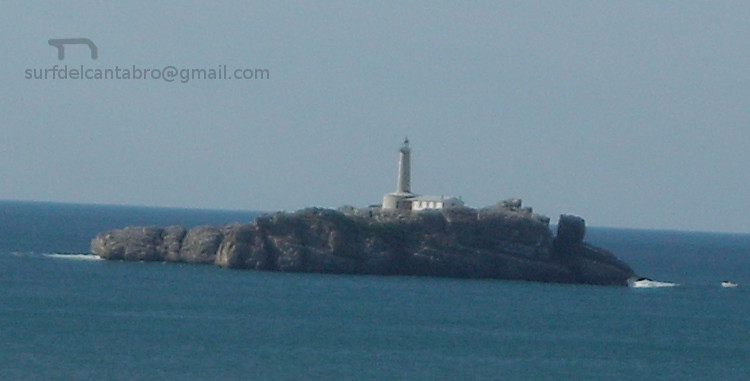
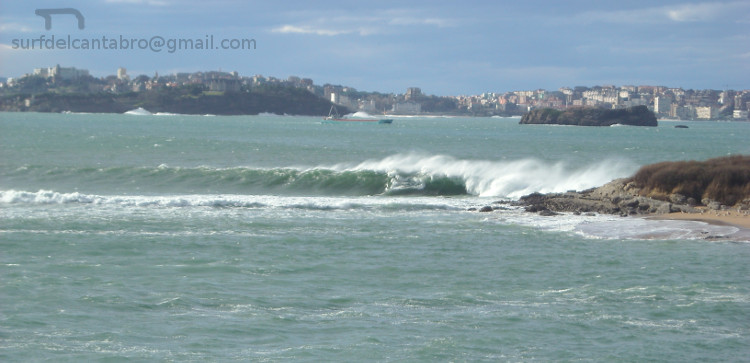
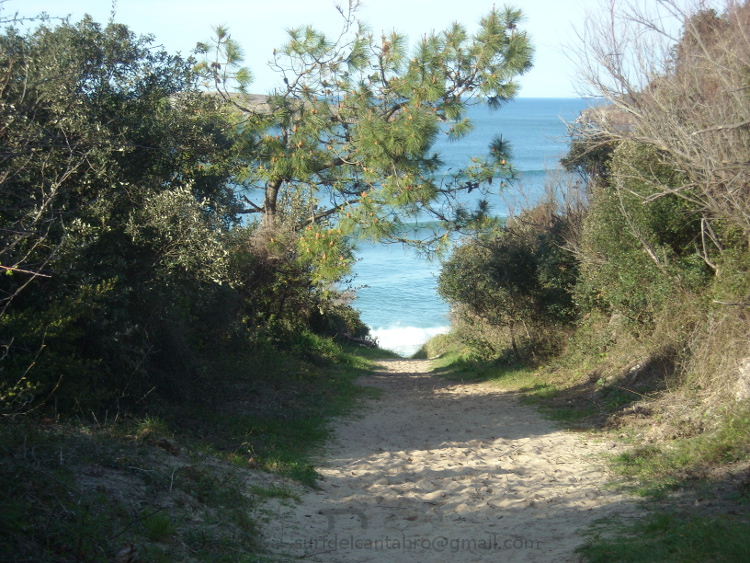
The word «Mogro» designates a Cantabrian coastal town next to Santander. Its meaning is a synonym for «castro«, which refers to Celtic oppidum, pre-roman generally. The word castro comes from the latin «castrum«, which means military fortification.

Icon close Sponsor

Share

Cómo elegir un traje de surf

Icono Español. Icon Spanish Elegir un traje de surf es una decisión que vamos a disfrutar o padecer durante varios años. Todo ello depende de tomar la opción más adecuada para cada uno.

En este artículo expongo mi punto de vista y experiencia al respecto. Deseando que pueda servir de guía a la hora de comprar un traje de surf.

Parámetros para una buena elección :

  1. Utilización
  2. Tallaje
  3. Medidas
  4. Grosor
  5. Tipos de trajes

1. Utilización. ¿ En que época del año vamos a usar el traje ? . Según la estación del año en la que practiquemos surf el grosor del traje y su tipo varían. Las variaciones incluyen trajes: largo o cortos, distintos grosores en milímetros del neopreno, elaboración del traje: sellado o costuras planas …

2. Tallaje. Las tallas de los trajes de surf vienen determinadas por las marcas. Prácticamente todos los fabricantes tienen su propio tallaje. Esto no significa que no sean equivalentes entre las distintas métricas. Pero si que podemos encontrar diferencias entre tallas en principio similares.

3. Medidas. Se trata de de obtener una imagen holográfica de nuestro contorno corporal a partir de unas mediciones hechas en centímetros o pulgadas (1 pulgada = 2,54 centímetros). Los datos más importantes son los siguientes :

  • Estatura
  • Peso, kg/LB (1 kg = 2 lb)
  • Pecho
  • Cintura
  • Pelvis (parte inferior de la cadera)

4. Grosor. Este parámetro esta muy relacionado con la temperatura del agua. Tabla orientativa (milímetros – Grados Centígrados):

  • 2 mm : 17-21
  • 3 mm : 14-17
  • 4 mm : 10-14
  • 5 mm : 8-10
  • 6 mm : 8 ó menos

Nota: los trajes de surf no tienen generalmente toda su superficie con el mismo grosor. Por ejemplo si su grosor es de 4 mm, se refiere al grosor de las piernas y el pecho, los brazos 3 mm. Hay que tener esto en cuenta. Es por ello que se pueden acompañar de guantes, escarpines y gorro; según sea necesario.

5. Tipos de trajes. Principales criterios :

  • Corto ó largo. Cualquier combinación respecto a la cobertura del cuerpo.
  • Costuras planas, ciegas o selladas (Mayor aislamiento de derecha a izquierda).
  • Cremallera : en la espalda( más cómodo de poner) o en el pecho( entra menos agua).

Consejo : el traje de surf debe quedar ajustado y que nos permita respirar cómodamente. Prestar atención al material de ciertas partes del traje, el cuello es preferible que sea hipoalergénico.

How to choose a wetsuit

Icono Inglés. Icon English When you choose a suit of surf is a decision that we are going to enjoy or suffer for several years. All of this depends on taking the most appropriate option for each one.

In this article I explain my point of view and experience in this regard. Looking forward that can serve as a guide to buying a suit of surfing.

Parameters for a good choice :

  1. Purpose
  2. Sizing
  3. Measures
  4. Thickness
  5. Type of wetsuits

1. Purpose. What time of year we are going to use the costume ? . According to the season of the year in which we practice surfing the thickness of the wetsuit and its type are different. Variations include: wetsuits long or short, different thicknesses in millimeters of the neoprene, development of the wetsuit: sealing or flat seams …

2. Sizing. The sizing of the wetsuits are determined by the marks. Virtually all manufacturers have their own scale . This does not mean they are not equivalent between the various metrics. But we could find differences between the same size with different brands.

3. Measures. This is to obtain a holographic image of our body contour from a few measurements made in inches or centimeters (1 inch = 2.54 centimeters). The most important data are the following :

  • Height
  • Weight, kg/lb (1 kg = 2 lb)
  • Chest
  • Waist
  • Pelvis (bottom of the hip)

4. Thickness. This parameter is closely related to the temperature of the water. Indicative Table (millimeters – degrees Celsius):

  • 2 mm : 17-21
  • 3 mm : 14-17
  • 4 mm : 10-14
  • 5 mm : 8-10
  • 6 mm : 8 ó menos

Note: the wetsuits do not usually have their entire surface with the same thickness. For example if its thickness is 4 mm, refers to the thickness of the legs and chest, the arms, 3 mm. This needs to be taken into account. That is why you can accompany of gloves, boots and hat; as needed.

5. Types of wetsuits. Main concepts:

  • Short or long. Any combination for coverage of the body.
  • Flat seams, blind or sealed (greater isolation from right to left).
  • Zip : in the back( more convenient to put) or in the chest( enters less water) .

Advise : the wetsuit should be tight and must to allows us to breathe comfortably.

Icon close Sponsor

Share

Isla de Mouro

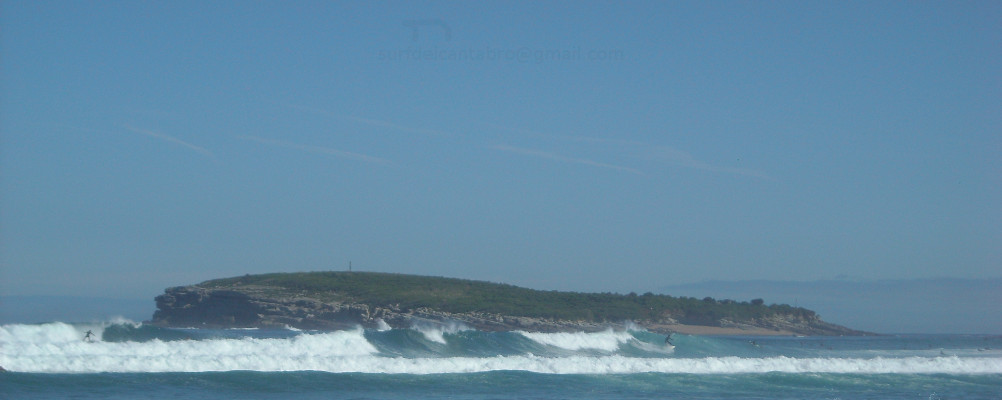
Icono Español. Icon Spanish La Isla de Mouro se encuentra ubicada a la entrada de la Bahía de Santander. Está situada entre La Península de la Magdalena y la Isla de Santa Marina. Ocupa un espacio de 1,7 hectáreas. Formada por rocas que acantilan todo su contorno, en su parte alta es prácticamente llana y cuenta con un faro que en la actualidad está automatizado, llamado Faro de La Isla de Mouro.

Es un lugar ideal para practicar submarinismo por la riqueza de sus fondos. Tiene una flora abundante y variada. Destaca la presencia de una planta, el hinojo marino. Es una especie muy utilizada como condimento gastronómico. Ya en el siglo XVI los buques franceses, ingleses y flamencos en su camino de vuelta desde Santander se aprovisionaban de ella en la Isla de Mouro.

La Isla de Mouro cuenta con una población de aves que nidifican en ella. Las especies de peces que la habitan y visitan es abundante, pues a la riqueza de sus fondos marinos se añade su emplazamiento. A la entrada de la bahía y próxima a su canal. Registra una gran parte de las especies de peces que se pueden encontrar en el Mar Cantábrico.

Destaca como hecho histórico la conquista de la isla por parte de los ingleses a la tropas napoleónicas, durante la Guerra de la Independencia Española (1808 – 1814). Siendo Inglaterra aliada de España.

Mouro Island

Icono Inglés. Icon English The Mouro Island is located at the entrance to the Bay of Santander. It is placed between the Peninsula of la Magdalena and the Santa Marina Island. It occupies an area of 1.7 hectares. Formed by rocks that acantilan all around, in its upper part is virtually flat and with a lighthouse which is now automated, called Lighthouse of Mouro Island.

It is an ideal place to practise diving for the wealth of its funds. It has an abundant and varied flora. It emphasizes the presence of a plant, the marine fennel. It is a species much used as gastronomic seasoning. Already in the XVIth century the French, English and Flemish ships in its way back from Santander were supplied of it in the Island of Mouro.

The Mouro Island has a population of birds that nest in it. The species of fish that inhabit and visit it is abundant, because of the wealth of its seabed and its location. At the entrance to the bay and next to its channel. Registers a large part of the fish species that can be found in Cantabrian Sea.

Stands out as historical fact the conquest of the island by the British to the Napoleonic troops, during the Spanish War of Independence (1808 – 1814). Being England ally of Spain.

Separador. DividerIcono Español-Inglés. Icon Spanish-English
islademouro
islademouro2Icono separador. Icon divider

Icon close Sponsor

Share

El arco de las olas

Icono Español. Icon Spanish El arenal en el que está incluida la Playa de Somo tiene una extensión de 7 km. Desde el punto medio de este extenso arenal, situados en tierra firme y volviendo la mirada hacia la izquierda se encuentra la Playa del Puntal. A la derecha la Playa de Loredo. Prácticamente en todo el recorrido se puede practicar surf. Además hay varias zonas donde la frecuencia y la calidad de las olas componen un área a modo de circuito. Existen varios de estos puntos y cada uno tiene olas diferentes.

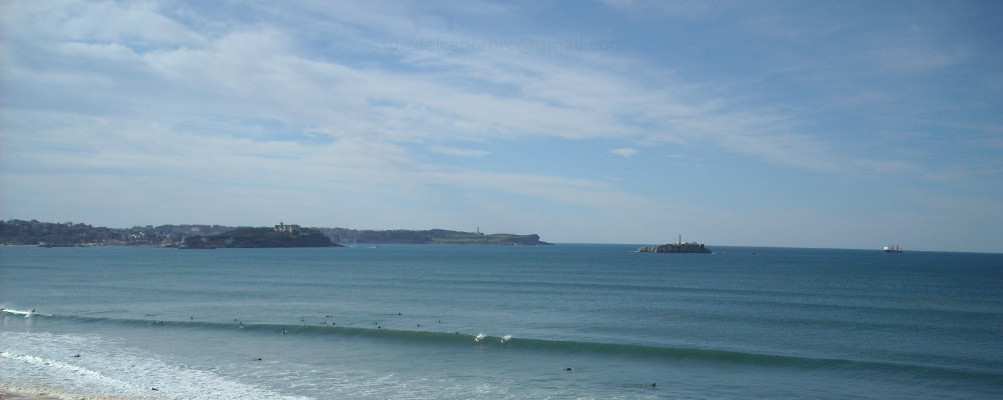
Entre la entrada principal de la Playa de Somo y la «Curva» de Loredo, la arena y el mar se dibujan en una recta de 500 metros; con un parque dunar a su espalda. Se lo conoce como Pinar de Arna. Con un pequeño parking a su entrada y separado del pinar por una valla de madera. Es un lugar ideal para realizar senderismo e ir de comida a la playa. Al fondo unas impresionantes vistas componen un cuadro único compuesto por la ciudad de Santander a un lado, la Isla de Mouro en la parte central vigilando la bahía, y la Isla de Santa Marina cerrando la composición en el otro lado. Todo ello unido por el mar. El mar que baña la tierra, las rocas y las islas. Uniendo todo el espacio y desapareciendo con la línea del horizonte.

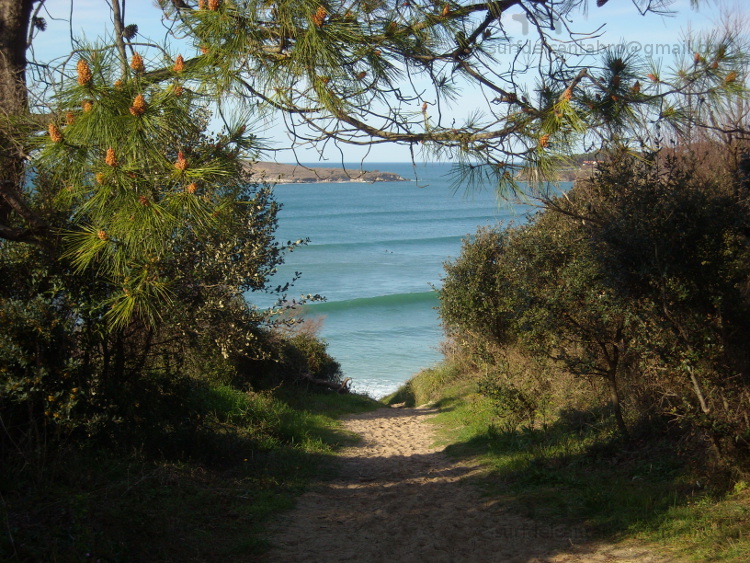
En la entrada del parque, a la derecha de la vaya, existe un camino que conduce directamente a la playa. Delimitado por rocas dispuestas en línea recta que indican la dirección adecuada. El trayecto se hunde irregularmente y transcurre en un estado natural y salvaje. Próximo a su final, un árbol inclinado sobre el recorrido dibuja un arco cerrado por la vegetación y el entorno. Dentro de él una ventana se abre. Las olas se ven llegar y el sonido orquesta el mayor de los estímulos para practicar surf y disfrutar de la naturaleza. Sólo un desnivel de 20 metros separa el final del pinar, de la playa. Bajando por un tobogán de arena que exige precaución y buena condición física se llega a donde uno antes imaginaba.

The arc of the waves

Icono Inglés. Icon English In The arenal which is placed the Somo Beach has an extension of 7 km. From the mid-point of this extensive stretch of sand, on land and looking to the left is El Puntal Beach. To the right is Loredo Beach. In virtually all parts of the route can be surfing. In addition there are several areas where the frequency and quality of the waves make up an area by way of circuit. There are several of these points and each one has different waves.

Between the main entrance of the Playa de Somo and the «Curve» of Loredo, sand and sea are drawn in a straight line of 500 meters, with a dune park to its back. It is known as Pinar Arna. With a small parking lot to its entry and separate from the pine forest by a wooden fence. It is an ideal place for hiking and go for lunch to the beach. At the end, a breathtaking views make up a picture consisting of the city of Santander to one side, Mouro Island in the central part watching the bay, and the Santa Marina Island closes the composition on the other side. All of this kingdom is met by the sea. The sea that bathes the land, the rocks and islands. Uniting all the space and disappearing with the horizon line.

At the entrance to the park, to the right of the go, there is a path that leads directly to the beach. Bounded by rocks arranged in a straight line to indicate the right direction. The journey is irregularly and takes place in a natural and wild state. Next to its end, a tree leaning over the tour draws a bow closed by the vegetation and the environment. Within it a window opens. The waves arrive and the sound produce a powerfull stimuli for surfing and enjoy the nature. Only a drop of 20 meters separates the end of the pine forest to the beach. You can go down through a waterslide of sand that requires caution and good physical condition. Then you are going to be in a place that you have imagined before.

Separador. DividerIcono Español-Inglés. Icon Spanish-English

Arco de las Olas, a lo lejos
Arco de las Olas, entrada

Icono separador. Icon divider

Icon close Sponsor

Share

El Brusco, un espectáculo inesperado

Icono Español. Icon Spanish En estos días finales del invierno y transcurridas ya dos semanas de tiempo soleado, el recuerdo de los temporales que azotaron la cornisa cantábrica parece lejano.

Los datos meteorológicos han revelado la inusual frecuencia de temporales y ciclogenesis explosivas que se han ido sucediendo desde diciembre hasta febrero. La cantidad de agua registrada en este período duplica y casi triplica la misma cantidad recibida en doce meses en años anteriores. Las boyas oceánicas captaron con inusitada frecuencia olas de más de 10 metros y de manera no tan excepcional olas que han superado los 20 metros. En estas condiciones la práctica del surf sólo ha sido apta para profesionales y expertos.

El Sol ocultado por el clima apareció como un oasis en días sueltos. En uno de esos momentos encontré la espontaneidad del arte y el surf. Fue a finales del mes de enero. Tras haber realizado un viaje. En el camino de vuelta a Cantabria, decidí hacer una parada en El Brusco, antes de comer. Pesca, senderismo, surf, playa… Llegar y ver, pensar y sentir, cargar las pilas. Pues el mar allí armoniza la estancia. Estacioné el coche lejos del monte y me puse a andar hacia él. A lo lejos ví un grupo de gente en la arena, el agua en el otro extremo de la imagen. Mirando las olas romper la marea iba tomando volumen. Como de costumbre había buenas olas. De 3 a 6 metros de altura y con una serie practicable. Conforme iba caminando aparecieron surfistas con bodyboard que tras calentar se metieron al agua montando algarabía. Las olas aumentaban de tamaño e iban adquiriendo un recorrido largo. Al llegar al final de la playa en el agua ya había más gente y las vistas se asemejaban a un pequeño parque de atracciones. Me dispuse a subir por el sendero que corona el monte. Así contemplaría toda la escena. Pasé por delante de dos hombres que estaban quietos, mirando y pensando. Al saludarlos me parecieron gente conocida. Sin darme cuenta, por la emoción del momento, que la pasión por el surf a todos nos acerca.

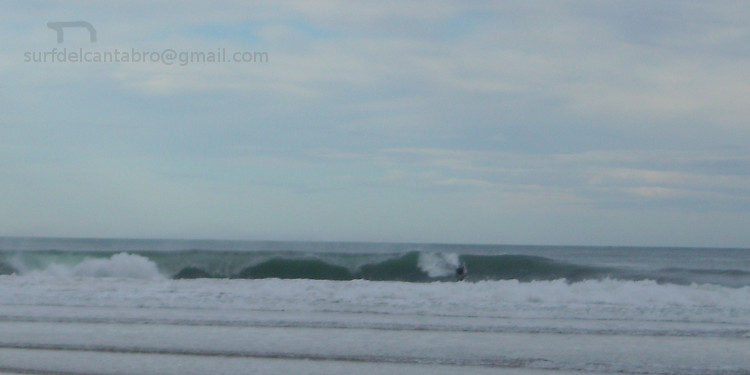
Asomando a la entrada del sendero, volví la vista a la playa. Una ola de 4 metros se acercaba. Quieto, expectante, espere unos segundos que parecieron eternos. Cortando la ola desde un costado apareció un surfer con un bodyboard. La masa de agua fue cayendo y desapareció. Continué mirando esperando otra ola así. Sin saber que lo mejor estaba por llegar. Mire el otro lado de la ola que se había entubado. Vi una figura y sonreí. Salió del tubo y antes de su cierre se catapultó un par de metros en el aire. Hizo una maniobra acompañada de un grito y finalmente aterrizó en el agua.

Regrese a la playa para conversar de surf. Ya no quedaba nadie en el arenal. La figura de uno de los hombres, que antes miraba, se dirigía hacia el agua. Con dos metros de alzada y la tabla de surf sujetada en un brazo. Entró al agua fría y se perdió detrás de las olas. Poco después volví a ver aquella figura. Desde la cresta hasta la base, ondulando el recorrido. Equilibrando su peso con los brazos. Congelando toda aquella imagen en la memoria del ojo que contempla.

El Brusco, An unexpected show

Icono Inglés. Icon English In these final days of winter after two weeks of sunny weather, the remembrance of the storms that struck the Cantabrian coast seems far away.

The meteorological data have revealed us the unusual frequency of storms and explosive cyclogenesis that have been happening since December until February. The amount of water recorded in this period almost tripled the same amount received in twelve months in previous years. The oceanic buoys have captured, with unusual frequency, waves of more than 10 meters and ,in a manner not so exceptional, waves that have exceeded 20 meters. In these conditions the surfing only has been suitable for professionals and experts.

The Sun was hidden by the state of the weather and only emerged as an oasis in loose days . In one of those moments I found the spontaneity of the art and the surf. It was at the end of the month of January. After a trip. On the way back to Cantabria, I decided to make a stop at «El Brusco» before eating. Fishing, hiking, surfing, beach … Come and see, think and feel, to charge the batteries. Because the sea there harmonizes the time. I parked my car far away from the mount and I began to walk toward it. In the distance I saw a group of people in the sand, the water at the other end of the image. The tide was taking volume. As usual there was good waves. From 3 to 6 meters in height and with a practicable series. As I was walking some surfers with bodyboard were enjoying the travel to the water. The waves increased in size and became as a motorway. At the end of the beach in the water there were already more people and the views were analogous to a small amusement park. I began to go up the trail that crown the mount. I wanted to contemplate the whole scene. I passed in front of two men who were perfectly still, looking and thinking. None of us were strangers at that place. We forgot, because of the emotion of the moment, that the passion for surfing met us.

When I was at the entrance of the trail, i returned the view to the beach. A wave of 4 meters was approaching. The watchful waiting was a few seconds that seemed to last forever. By cutting off the wave from the side appeared a surfer with a bodyboard. The mass of water was falling and disappeared. I continued watching waiting for another wave as well. Without knowing that the best was to come. Look at the other side of the wave that had been entubated. I saw a figure and I smiled to myself. The surfer came out of the tube and before its closure he was catapulted two meters in the air. He made a maneuver accompanied by a cry and finally landed in the water.

I came back to the beach to talk about surfing. There was no one in the sand. The figure of one of the men that were thinking there before, were now walking toward the water. With two meters over his feet, and the surfboard in an arm. He entered the cold water and was lost behind the waves. Shortly after I returned to see that figure. From the top to the base, undulating the tour. Balancing his weight with his arms. The experience became an frozen image in the memory.

Separador. DividerIcono Español-Inglés. Icon Spanish-EnglishSurf. El BruscoIcono separador. Icon divider
Icon close Sponsor

Share

Playa de los Peligros. Origen del nombre

Icono Español. Icon Spanish «La Playa de los Peligros» se encuentra en el arenal interior de la Bahía de Santander, a la sombra de la Península de La Magdalena. Siendo esta zona el principal punto estratégico y defensivo de la ciudad, pues daba acceso a la bahía; punto de entrada a la ciudad.

Durante los siglos III y IV D.C se produjeron los ataques de los bagaudas. Ladrones y campesinos sublevados que buscaban el sustento con el pillaje. Desde esta época hasta el siglo VIII se suceden las invasiones bárbaras. Iniciadas por pueblos germánicos principalmente. Las últimas invasiones son hechas por vikingos y magiares(pueblo del este de Europa, localizado en la actual Hungría). Es Napoleón quien configura una nueva estrategia para la defensa de la península. Pudiendo ser atacada por todos los flancos y con el fin de optimizar la tarea militar dispone sus hombres en las zonas anteriores y colindantes a la península.

Todos estos hechos reflejan la imposibilidad de defender la zona completamente. Durante el siglo XIX y principios del siglo XX entran a la villa por esta playa los piratas para saquear. Por este motivo se la conoce como «Playa de los Peligros«.

Playa de Los Peligros. Origin of the name

Icono Inglés. Icon English «Los Peligros Beach» is located in the arenal that is inside of the Bay of Santander, in the shadow of the peninsula of La Magdalena. This area was the main strategic and defensive point of the city, giving access to the bay; entry point to the city.

During the centuries III and IV D. C the attacks of the bagaudas were happened. They were thieves and peasant rebels who sought the livelihood with the pillage. From this time until the eighth century there was a succession of barbaric invasions. Initiated by Germanic peoples primarily. The latest invasions are made by vikings and Magyars(groups from the eastern of Europe, located in what is today Hungary). It was Napoleon who sets up a new strategy for the defense of the peninsula. As this place may be attacked from all sides and in order to optimize the military task has its men in the previous and adjacent areas to the peninsula.

All these facts reflect the inability to defend the area completely. During the nineteenth and early twentieth century the pirates come to the city through the beach to plunder. For this reason it is known as «Los Peligros Beach«.

Icon close Sponsor

Share

Playa de los Peligros: Windsurf, Kitesurf

Icono Español. Icon Spanish La Playa de Los Peligros está situada en la ciudad de Santander, junto a la Playa de la Magdalena.

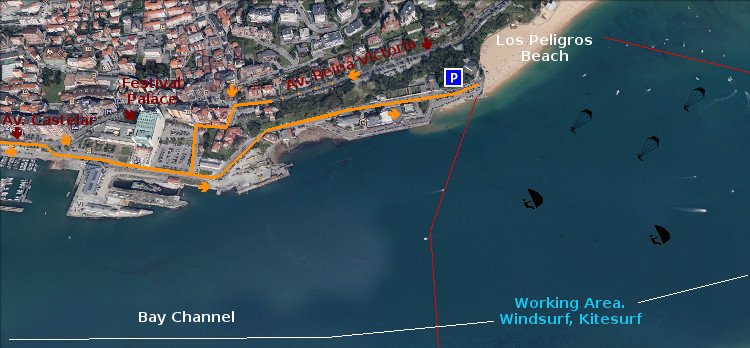
Para llegar a Los Peligros hay dos vías. La primera desde la Calle Castelar cogiendo el desvío a mano derecha para ir al Palacio de Festivales de Cantabria. Después continuamos la carretera hasta el final. La segunda opción desde la Avenida Reina Victoria, viniendo de la península de la Magdalena. Al Final de la avenida, girando a la izquierda se accede a parte del recorrido anterior.

Los Peligros es una playa de arena blanca y fina. Sus aguas son tranquilas y sin oleaje. Es adecuada para el baño, el disfrute del mar y su arenal. Cuenta con un parking amplio que se suele llenar en verano. El paseo hasta la playa constituye en sí mismo un pequeño viaje. Al tiempo que se ve una parte portuaria antigua de la ciudad se visualiza la Bahía de Santander y un puzzle montañoso al fondo.

Los días de viento esta sencilla zona se convierte en un circuito deportivo frecuentado por velas y cometas de winsurf y kitesurf. Desde la playa se entra a estas autopistas virtuales que cuentan con suficiente espacio para disfrutar de estas modalidades de surf. En este lugar generalmente el viento está presente en mayor o menor grado. Convirtiendo a la playa de Los Peligros en un lugar ideal para la práctica del windsurf y kitesurf.

Playa de Los Peligros: windsurf, kitesurf

Icono Inglés. Icon English Los Peligros Beach is located in the city of Santander, next to the Magdalena Beach.

To reach Los Peligros there are two ways. The first from the Castelar Street. Taking the detour to the right to go to the Palacio de Festivales de Cantabria. Then we continue the road to the end. The second option from the Avenida Reina Victoria, coming from the peninsula of la Magdalena. At the end of the avenue, turning to the left to access part of the above route.

Los Peligros is a beach of fine and white sand. Its waters are calm and without waves. It is suitable for the swiming, the enjoyment of the sea and its arenal. Account with an ample car parking which is usually fill in summer. The walk down to the beach is a small trip. At the same time that we see a part of the ancient port part of the city is displayed the Santander Bay and a puzzle of mountains in the background.

The windy days this area becomes a sporting circuit frequented by sails and kites of windsurfing and kitesurfing. From the beach you access to several and endless virtual highways that have enough space to enjoy these modalities of surfing. The wind is usually present to a greater or lesser degree in this zone. Turning to Los Peligros Beach in an ideal place for windsurfing and kitesurfing.

Separador. DividerIcono Español-Inglés. Icon Spanish-EnglishLos PeligrosIcono separador. Icon divider
Icon close Sponsor

Share

El viento extremo, un motivo para una ola gigante

Icono Español. Icon Spanish. El viento extremo La fuerza extrema del viento es uno de los factores que dan lugar olas gigantes. Durante este invierno se han sucedido temporales, borrascas y ciclogénesis explosivas en el Mar Cantábrico con una frecuencia inusual. ¿ Cuál es la causa ?. Leer más … Icono. Icon

The extreme wind, a reason for a giant wave

Icono Inglés. Icon English. The extreme wind The extreme force of the wind is one of the factors that give place giant waves. This winter there have been temporary, squalls and explosive cyclogenesis in the Cantabrian Sea with an unusual frequency. What is the cause? Read more … Icono. Icon

Separador. DividerIcono Español-Inglés. Icon Spanish-English. El viento extremo. The extreme windIcono. Icon
Icono separador. Icon divider

Icon close Sponsor

Share