Noja, Playa de Ris .

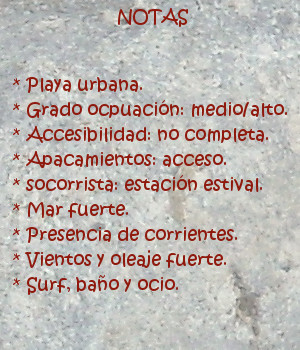
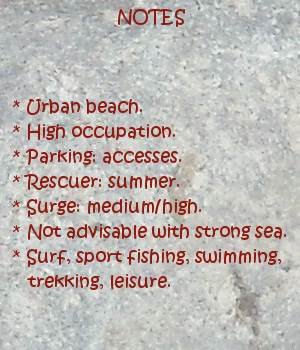
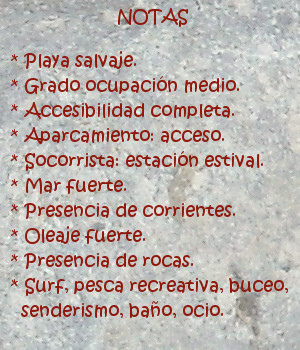
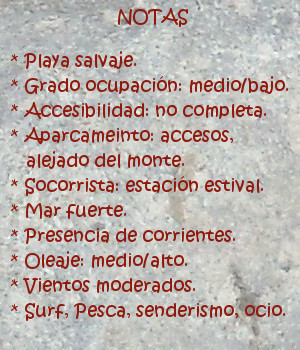
Icono Español. Icon Spanish. Noja, Ris beach La playa de Ris está ubicada en el municipio de Noja, perteneciente a la comarca de Trasmiera; en la costa occidental de Cantabria. Su longitud de 2200 metros y anchura media de 100 metros, junto con su emplazamiento urbano, hacen de ella una playa con un alto grado de ocupación.

Este gran arenal tiene dos partes diferenciadas. Una de ellas, próxima a la Ría de Quejo, es una zona retirada, tranquila, situada en el límite de Las Marismas de Joyel (una de las tres partes que componen el Parque Natural de las Marismas de Santoña, Victoria y Joyel) y por ello se la conoce como Playa de Joyel. Gobernada por el ritmo de las mareas, que ocultan el 60% de la superficie de la playa con la pleamar. La otra zona, emplazada frente a Noja y delimitada en sus extremos por islotes rocosos, es la parte urbana de la playa de Ris. Descubre la bajamar el fondo arenoso y parcialmente cubierto por rocas, la forma curvada de la playa y el agua retrocediendo desde la orilla hacia el Mar Cantábrico; creando pequeños remolinos en los laterales por los efectos de las corrientes.

La Playa de Ris es, por sus características, recomendable para el ocio, la pesca y el baño. Ideal para la práctica de paddle sup, con la mar tranquila. Surfear en esta playa produce sesiones entretenidas para todos los niveles cuando las condiciones son aceptables. Allí, La Mar fuerte es sólo apta para surfers experimentados que conozcan bien la zona y para caminantes que quieran disfrutar del espectáculo de un temporal en esta parte de la costa cántabra.
Cabecera Cities Place Beaches. Noja, Ris beach
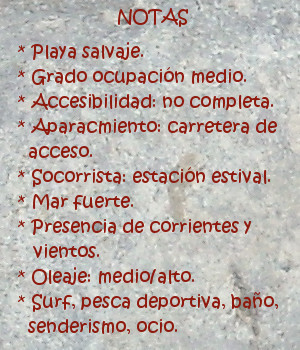
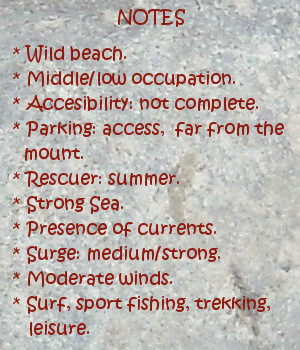
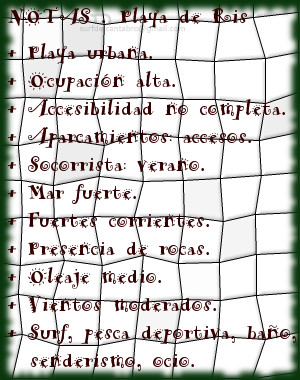
Ris, Notas

Noja, Ris beach

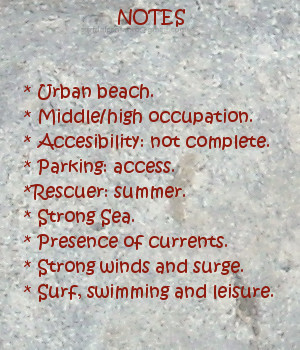
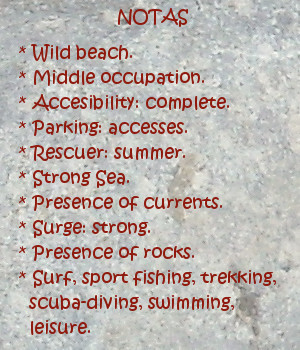
Icono Inglés. Icon English. Noja, Ris beach The beach of Ris is located in the municipality of Noja, belonging to the region of Trasmiera; on the western coast of Cantabria. Its length of 2200 meters and average width of 100 meters, added up to its urban emplacement, do of it a beach with a high degree of occupation.

This great sandbank has two differentiated parts. One of them, next to the Stuary of Quejo , it is a calm and remote zone, placed in the limit of The Marshes Joyel (one of three parts that compose the Nature reserve of Santoña’s Marshes, Victoria and Joyel) and due to this is known as Beach of Joyel. Governed by the pace of the tides, which conceals the 60% of the surface of the beach with the high tide. The other zone located opposite to Noja and delimited in its ends by rocky islands, is the urban part of Ris’s beach. The low tide discovers the sandy bottom and partially covered by rocks, the curved form of the beach and the water moving back from the shore towards the Cantabrian Sea; creating small whirlpools in the wings because of the effects of the currents.

The Beach of Ris is advisable for the leisure, the fishing and the swimming. Ideal for the practice of paddle sup, with the calm sea. To play surf in this beach produces enjoyable sessions for all the levels when the conditions are acceptable. There, The strong Sea is only suitable for experienced surfers that know well the zone and for wayfarers who want to enjoy the spectacle of the storm in this part of the Cantabrian coast.
Cabecera Cities Place Beaches. Noja, Ris beach
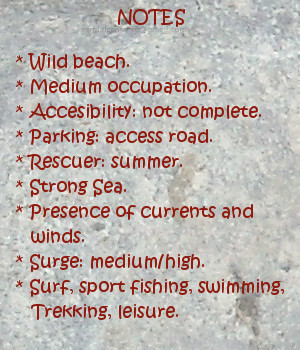
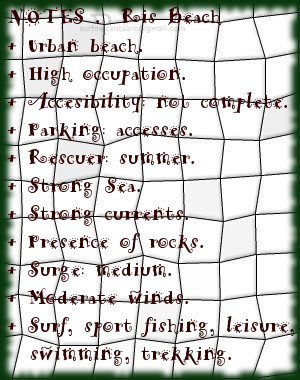
Ris beach, notes

Share

Gerra, playa

Icono Español. Icon Spanish. Gerra, playa La playa Gerra, también llamada El Cabo, se encuentra en el municipio de San Vicente de la Barquera; en la costa occidental de Cantabria. Situada en la cara oeste del cabo que une la costa de San Vicente de la Barquera con la costa de Oyambre, es una playa de 900 metros de longitud y una anchura media aproximada de 30 metros.

Su escarpado acceso esconde parcialmente a Gerra y da entrada a un emplazamiento idílico con vistas panorámicas, que en los días de buena visibilidad muestran parte de la costa asturiana y Los Picos de Europa. A los pies de los acantilados y protegida por El Cabo de Oyambre, recoge los vientos de la ensenada y las corrientes de la zona. Destaca la calidad de sus aguas, limpias y trasparentes, que dejan traslucir sus fondos cerca de la orilla; sólo enturbiada por las fuertes corrientes que hay en el área y el viento, presente de manera habitual.

El emplazamiento de Gerra, entre acantilados y formaciones rocosas, hacen que su fondo arenoso se mezcle con rocas sueltas y diseminadas por todo el área. Las zonas cercanas a la orilla y próximas al pico PeñaEntera son evitables en la práctica del surf, pues además las corrientes son fuertes cerca de la pico montañoso que delimita a Gerra. Nacen las olas a 100 metros de la arena, siendo su recorrido de pequeña e «intensa» extensión. Abren sus olas a izquierdas y derechas, combandose por el trazado curvo de la playa, favoreciendo las maniobras y el viaje activo para su navegación.

Corre el aire, vuela sobre las aguas de Gerra, proporcionando energía a sus olas, moldeando sus formas. Prologando en el tiempo y en el espacio las paredes de agua que allí se forman. Si está ausente, es que ya pasó, y sobre las ondas reflejado queda su filtrado, su pulido acabado, sello característico de esta singular zona de la costa cántabra.

comic, mountain
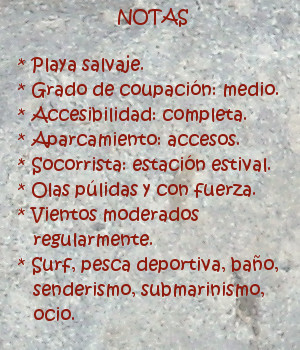
Gerra, notas

Gerra, beach

Icono Inglés. Icon English. Gerra, beach The beach of Gerra, also called El Cabo, is in the municipality of San Vicente de la Barquera; on the western coast of Cantabria. Placed in the west side that joins the coast of San Vicente de la Barquera with Oyambre’s coast, is a beach of 900 meters of length and an average approximate width of 30 meters.

Its steep access hides partially Gerra and gives entry to an idyllic emplacement with panoramic view, that in the days of good visibility show part of the Asturian coast and the massif Picos de Europa. To the feet of the cliffs and protected by Oyambre’s Cape, which gathers the winds of the inlet and the currents of the zone. Stands out the quality of its waters, clean and clear, that show its funds near the shore; only muddied by the strong currents that exist in the area and the wind, present in an habitual way.

The emplacement of Gerra, between cliffs and rocky formations, which do that its sandy bottom mixes with free and scattered rocks in all the area. The zones near to the shore and next the beak PeñaEntera are avoidable in the practice of the surf, since in addition the currents are strong near its mountainous peak that delimits Gerra. The waves are born to 100 meters of the sand, being its tour with small and intense extension. It open its waves for left and rights sides, curving because of the curved tracing of the beach, favoring the maneuvers and the active trip for its navigation.

It traverses; the air, flies on Gerra’s waters, providing energy to its waves, molding its forms. It extend, in the time and in the space, the water walls that there are formed. If it is not in, it is that already it happened, and on the waves is reflected its filtered, its polished ended, typical stamp of this singular zone of the Cantabrian coast.
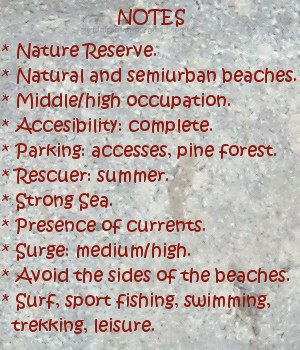
comic, mountain
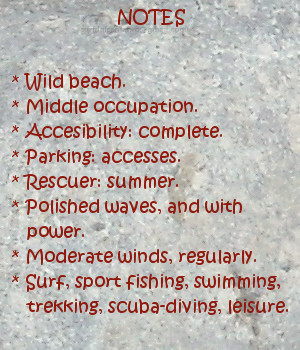
Gerra, notes

Share

Oyambre, playa

Icono Español. Icon Spanish. Oyambre, playa La playa de Oyambre está situada en el municipio de Valdáliga, emplazado en la costa occidental de Cantabria. Situada dentro del Parque Natural de Oyambre, es un extenso arenal de 1800 metros de longitud dispuestos en linea recta y curvando su ala izquierda por la morfología de su entorno dominado por acantilados. El extremo derecho continúa a través de la costa cántabra hasta perderse en el horizonte.

La entrada a la playa se realiza a través de un pequeño aparcamiento habilitado para 50 vehículos, aproximadamente. La contemplación de Oyambre produce en el caminante una sensación acogedora e intima, que contrasta con la amplitud y enormidad del entorno. Salvaje y naturalmente dibujada, es recorrida por el viento en toda su plenitud que la visita de forma casi regular. Su extensión se plasma por medio de una llanura de arena endurecida, con una leve pendiente hasta la orilla, a modo de invitación para conocer sus aguas. La playa de oyambre, por sus características, sirvió en el siglo pasado de pista de aterrizaje del llamado «Pájaro amarillo»; primer avión que cruzó el Océano Atlántico en una travesía de 29 horas. Esto da una idea de la singularidad del lugar.

Baña el Mar la costa y la playa, ondula suavemente el fondo arenoso por los efectos de las mareas y el oleaje. Aparecen las ondas en diversos picos de olas que existen en la playa. Su forma pulida y recorrido alargado,en la zona central, se combina con áreas donde estas recorren menor extensión y favorecen las maniobras. Golpea el Mar Cantábrico al surfista, iniciando así la navegación, naciendo su viaje sobre las olas. Travesía prolongada y colmada, pues a la energía que inyecta la velocidad se suma la pureza del agua, del aire, la belleza de la costa al fondo, que por sensaciones llegan a uno mismo y terminan por prender el fuego en el interior.

comic, mountain
Playa de Oyambre, notas

Oyambre, beach

Icono Inglés. Icon English. Oyambre, beach The beach of Oyambre is placed in the municipality of Valdáliga, located in the western coast of Cantabria. Housed inside the Nature Reserve of Oyambre, it is an extensive sandbank of 1800 meters of length arranged on straight line; with a left wing curved because of the morphology of its environment dominated by cliffs. The right wing continues across the Cantabrian coast up to getting lost in the horizon.

The entry to the beach is realized across an small parking enabled for 50 vehicles, approximately. Oyambre’s contemplation produces in the wayfarer a cozy and intimate sensation, that contrasts with its length and enormity of its environment. Wild and naturally drawn, is crossed by the wind in all its fullness that visits it almost regularly. Its extension takes form by means of a plain of hard sand, with a slight earring up to the shore, as an invitation to know his waters. The beach of Oyambre, for its characteristics, was used int the last century as a runway of the so called yellow Bird; the first plane that crossed the Atlantic Ocean in a voyage of 29 hours. This gives an idea about the singularity of the zone.

The Sea bathes the coast and the beach, it waving softly the sandy bottom due to the effects of the tides and the surge. The waves appear in diverse beaks that exist in the beach. Its polished form and elongated tour, in the central zone, combines with areas where them are in less extension and allow the maneuvers. It strikes the Cantabrian Sea to the surfer, initiating in this way the navigation, borning his trip on the waves. Long and fulfilled voyage, because at the energy that injects the speed is added the purity of the water, of the air, the beauty of the coast in the background, which through its sensations come to oneself and them end for lighting the fire inside.

comic, mountain
Oyambre beach, notes

Share

Ajo, playas

Icono Español. Icon Spanish. Ajo, playas Es Ajo una localidad situada en la costa oriental de Cantabria. Su abrupta y antigua costa se extiende a lo largo de más de 10 kilómetros a los que llega el Mar Cantábrico en estado natural para mostrar los matices que Ajo consigue reflejar. Salvaje y natural, anónimo y auténtico, desconocido en ocasiones y sin embargo familiarmente reconocible. Tiene la villa dos playas conocidas como Playa de Cuberris y Playa de Antuerta.

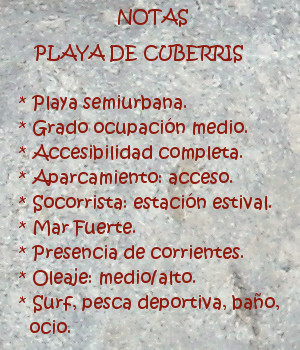
Es la primera de ellas una playa, con la anchura suficiente para albergar varios picos de olas, con distintos comportamientos. A izquierdas y derechas abren sus recorridos, habilitando las maniobras o el trazado largo, pudiendo satisfacer a cualquier surfista que se introduzca en sus aguas. Los acantilados laterales protegen la zona y encarrilan el oleaje. Cuando la Mar está fuerte, practicar surf, se convierte en una actividad sólo recomendable para surfers experimentados y conscientes de los riesgos. Destaca el entorno que rodea a la playa y la visión que se tiene en el agua de él, que constituye un disfrute para los sentidos y la imaginación.

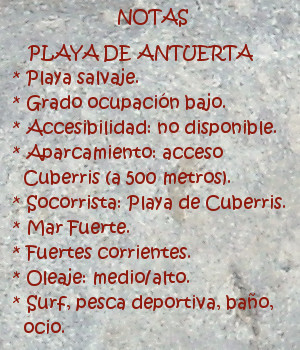
La playa de Antuerta es una cala de gran tamaño situada entre acantilados y con forma de media luna. Para llegar a ella, hay que recorrer una pequeña colina que oculta el arenal y la descubre a cada paso. La contemplación de su entorno traduce en emoción la altura de sus rocas y el sonido del mar. Las dimensiones más reducidas de Antuerta, junto con la presencia de rocas, hacen que sus olas sean aptas para los surfers más experimentados.

Disfrutar de las playas de Ajo que baña el Mar Cantábrico, pues el mismo agua que golpea Antuerta, ladea la colina y baña con trazo Antuerta; produciendo olas ondulantes de peculiar trazado. Ir y conocer, para después volver.

comic, mountain
Ajo, Cuberris: Notas
Ajo, Antuerta: Notas

Ajo, beaches

Icono Inglés. Icon English. Ajo, beaches It is, Ajo, a locality placed in the oriental coast of Cantabria. Its abrupt and former coast spreads through more than 10 kilometres, to which the Cantabrian Sea comes in natural condition to show the shades that Ajo reflects of it. Savage and natural, anonymous and authentic, stranger in occasions and nevertheless familiarly recognizable. The villa has two beaches known as Cuberris’s Beach and Antuerta’s Beach.

It is the first one of them a beach, with the sufficient width to shelter several beaks of waves, with different behaviors. For left and right side them open its tours, enabling the maneuvers or the long tracing, being able to satisfy any surfer that sail in its waters. The lateral cliffs protect the zone and put on the right lines the surge. When the Sea is rough, to practice surf turns into an activity only advisable for experienced surfers and conscious of the risks. Stands out the natural environment that makes a complete picture of the beach and the vision from the water of it, which constitutes an enjoyment for the senses and the imagination.

The beach of Antuerta is a big cove placed between cliffs and with form of half moon. To come there , it is necessary to cross a small hill that conceals the sandbank and discovers it to each step. The contemplation of its environment translates in emotion the height of its rocks and the sound of the Sea. The limited dimensions of Antuerta, together with the rocks presence, do that its waves are suitable and for the most experienced surfers.

You could enjoy the beaches of Ajo that bathes the Cantabrian Sea, because the same waters that strike Antuerta, tilt themselves through the hill and bathes with lines Antuerta; producing undulating waves of peculiar tracing. To go and to know, later to return.

comic, mountain
Ajo, Cuberris: Notes
Ajo, Antuerta: Notes

Share

Los Locos, playa

Icono Español. Icon Spanish. Los Locos playa La playa de Los Locos está situada en el municipio de Suances, en la costa central de Cantabria. Su longitud aproximada de 500 metros y anchura media de 20 metros constituye el emplazamiento natural donde terminan las olas que entran a la Ensenada de Cabrera. Es Los Locos una playa urbana que presenta cierto aislamiento debido a su ubicación. Localizada a los pies de los acantilados que unen Suances con la Punta del Dichoso y forman estos una península que hace de cierre y acota su ala este.

Es una de las zonas de la costa cántabra que presenta olas durante todo el año. El fuerte oleaje y la presencia de vientos contribuyen a la calidad de sus ondas. El pico central adquiere buen tamaño, 2 metros aproximadamente. Cercano al ala oeste, abre a ambos lados. Destacando su salida izquierda que puede alcanzar largo recorrido con presencia de tubos.

El acceso al arenal se realiza por un pronunciado desnivel a través de la calzada que hay habilitada. En el momento del descenso, es cuando veremos la playa. Percibiendo sus dimensiones reales y naturaleza propia que van más allá de las palabras. Alzando la vista, ante el caminante, aparece una visión panorámica de toda la zona. La avalancha de estímulos e información dan paso al sencillo disfrute de los sentidos. Cuando los atardeceres son coloreados, y el olor del Mar Cantábrico inunda las inmediaciones de la playa de Los Locos, comienza la hora de los sueños que algún amanecer podrá plasmar.

comic, mountain
Los Locos, notas

Los Locos, beach

Icono Inglés. Icon English. Los Locos beach The beach of Los Locos is placed in the municipality of Suances, in the central coast of Cantabria. Its approximate length of 500 meters and average width of 20 meters constitutes the natural emplacement where finish the waves that enter to the Inlet of Cabrera. It is The Madmen an urban beach that presents certain isolation due to its location. Located to the feet of the cliffs that joins Suances with El Dichoso Tip, these form a peninsula that it does of closing and protect its east wing.

It is one of the zones of the Cantabrian coast that presents waves all the year. The strong surge and the wind presence contribute to the quality of its waves. The central break acquires good size, 2 meters approximately. It rise near the west wing, and opens to both sides. Emphasizing its left path that can reach an important length with presence of pipes.

The access to the sandbank is realized by a pronounced slope across the causeway that has been enabled. In the moment of the descent, is when we will see the beach. Perceiving its real dimensions and own nature that go beyond the words. Lifting the sight, in front of the wayfarer, appears a panoramic vision of the whole zone. The avalanche of stimuli and information give step to the unassuming enjoyment of the senses. When the late afternoons are colored, and the smell of the Cantabrian Sea floods the surrounding areas of Los Locos beach, begins the hour of the dreams that some dawn will be able to form.

comic, mountain
Los Locos notes

Share

La Vaca, lugar

Icono Español. Icon Spanish. la maruca lugar La Vaca es la ola más grande de Cantabria. Superando con facilidad los 5 metros de altura, ha registrado valores superiores a los 10 metros y en competición las olas surfeadas alcanzaron los 7 metros.

Situada en la costa norte de Santander, su localización se emplaza entre la playa de El Bocal y los acantilados de Las Canteras de Cueto. Su oleaje, superior al resto de olas que existen en la zona, se debe a varios factores. La fuerza y tamaño del Mar Cantábrico en esta parte de la costa son importantes, junto con las características del fondo local contribuyen a crear un spot único. La sucesión del fondo fragmentado y rocoso, que llega hasta Las Canteras con una pendiente del 65%, provocan la proyección de las olas y la concentración de la energía. El sistema compuesto por todos estos factores produce olas de tamaño mayor a los registrados en los spots cercanos. El fondo quebrado traslada su ser a la ola esculpiendo la superficie de la onda con irregular forma.

Es La Vaca una ola gigante, potente y peligrosa cuyos fondos de roca se encuentran a apenas metro y medio de la superficie del agua con la bajamar. Los acantilados que la rodean dificultan el acceso de los surfistas y a su vez componen un mirador natural con vistas panorámicas a la gran ola y esta parte salvaje y monumental de la costa Quebrada. Su acceso, a través de una senda pública, conducirá al paseante inquieto a descubrir la ola, el entorno y el Mar. Acompañados, a cada paso, por las vacas que pastan libres a lo largo del recorrido con mirada curiosa mientras suena de fondo la natural relación entre el Mar Cantábrico y la costa.

comic, mountain

La Maruca, place

Icono Inglés. Icon English La Vaca is the biggest wave of Cantabria. It can overcome 5 meters of height, it has been registered values over 10 meters and in competition the navigated waves reached 7 meters.

Placed on the north coast of Santander, its location is placed between the beach of El Bocal and the cliffs of The Quarries of Cueto. Its surge, bigger than the rest of the waves that exist in the zone, owes to several factors. The force and size of the Cantabrian Sea in this part of the coast are important, together with the characteristics of the local bottom which help to create the original spot. The succession of the fragmented and rocky bottom, which comes up to The Quarries with a slope of 65 %, provokes the projection of the waves and the concentration of the energy. The system composed by all these factors produces waves of size bigger than the registered ones in the nearby spots. The broken bottom translates its nature to the wave and sculpts the surface of the wave with irregular form.

It is La Vaca a giant, powerful and dangerous wave which marine rocky bottoms are to scarcely meter and a half of the surface of the water in the low tide. The cliffs that surround it impede the access of the surfers and in turn them compose a natural viewing-point with panoramic to the great wave and this wild and monumental part of the Quebrada Coast. Its access, across a public path, will drive the curious walker to discover the wave, the environment and the Sea. Accompanied, on every step, with the cows that graze free along the tour with curious look while the natural relation between the Cantabbrian Sea and the coast sounds around.

comic, mountain

Share

Parque Natural Dunas de Liencres, lugar

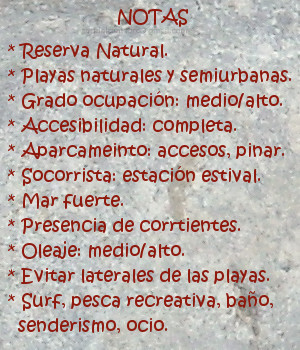
Icono Español. Icon Spanish. El Parque natural de las Dunas de Liencres se ubica en la localidad costera cántabra de Liencres, perteneciente al municipio de Piélagos. Tiene una extensión de 256,81 hectáreas localizadas a lo largo de la desembocadura del río Pas; conocida como Ría de Mogro. Donde las corrientes son fuertes y constantes, debido al efecto de las mareas,imposibilitando la práctica del surf.

El parque se extiende desde la Ría de Mogro hacia el este. incluyendo formaciones dunares que se desplazan por efecto del viento, un gran bosque de pino Marítimo que asienta las dunas y da forma al parque, y dos playas que miran a mar abierta: Valdearenas y Canallave.

La playa de Valdearenas es la de mayor extensión, con una longitud de 2800 metros y 40 metros de anchura media. Alberga varias zonas con diferentes picos de olas que se anexan unos a otros, plasmando la naturaleza salvaje y fuerte del Mar Cántabrico a través en cada onda que se navegue. Todas las zonas presentan fuertes corrientes, aumentando en los laterales de la playa.

La playa de Canallave, la menor de las dos, tiene una longitud de 220 metros y una anchura media de 50 metros. De forma irregular, compuesta de arena fina y sembrada de rocas, extiende su trazado hacia el este. Cuenta con dos olas definidas. Naciendo a 100 metros de la orilla, elevan su tamaño sobre los dos metros, para avanzar después y abrir el trazado a ambos lados. La zona más alejada, situada en frente de los acantilados de la Costa Quebrada, es conocida como El Madero.

comic, mountain
Liencres, notas

Liencres Dunes Nature Reserve, place

Icono Inglés. Icon English. The Liencres Dunes Nature Reserve is located in coastal Cantabrian locality of Liencres, belonging to the municipality of Piélagos. It has an extension of 256,81 hectares placed along the mouth of Pas river; known as Stuary of Mogro. Where the currents are strong and constant, due to the effect of the tides, which not allow to practice surf.

The park spreads from the stuary of Mogro eastward. Including dune formations that move for effect of the wind, a great forest of Maritime pine that hold the dunes and it gives form to the park, and two beaches that meet at opened sea: Valdearenas and Canallave.

The beach of Valdearenas is that of major extension, with a length of 2800 meters and 40 meters of average width. It shelters several zones with different beaks of waves that each one is next to the others, comunicating the wild and strong nature of the Cantabrian Sea through every wave that is navigated. All the zones have strong currents, which increase in the wings of the beach.

The beach of Canallave, the minor of the two beaches, has a length of 220 meters and an average width of 50 meters. Its irregular form consisted of thin sand and filled with rocks, it extends its tracing eastward. It possesses two definite waves. Them are born to 100 meters of the shore, to raise its size over two meters, to advance later and open the tracing for both sides. The most remote zone placed opposite the cliffs of the Quebrada Coast, is known as El Madero.

comic, mountain
Liencres, notes

Share

El Sardinero, playa

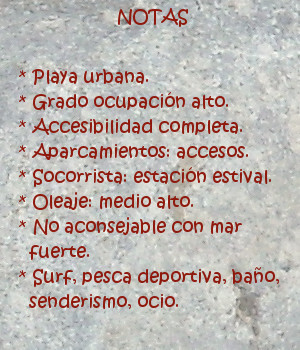
Icono Español. Icon Spanish. Sardinero playa El Sardinero, ubicado en la ciudad de Santander, es un área grande que se extiende desde la Península de la Magdalena hasta la zona de Mataleñas; próxima al Faro de Cabo Mayor. Sus playas se alojan en un arenal cuya superficie supera las 10 hectáreas. Con una longitud de 1500 metros y una anchura media de 80 metros, el banco de arena queda dividido en dos partes por los Jardines de Píquio. Aparecen así dos playas conocidas como: la Primera playa del Sardinero y la Segunda playa del Sardinero y cuatro zonas diferenciadas, que a la anteriores se unen La Concha y El Muro.

Dentro de esta ensenada que precede a la Bahía de Santander el surf es una de las actividades más importantes. Cuenta con varias zonas y olas diferentes. Los días de mar fuerte las olas entuban y cierran en bloque, no siendo aconsejable su práctica.

Es el Sardinero una playa que convive directamente con el Mar Cántabrico, y sufre los efectos de los temporales que en invierno azotan Cantabria. Por este motivo, hace unos año se reconstruyó el paseo de la parte final de la segunda playa, ampliando y reforzando el muro que allí había. Esta nueva zona espera a las olas que arriban a ella, agolpando y comprimiendo su energía para regenerar las ondas con superficie lisa y medio recorrido. Ola tras ola, ola con ola; forman un circuito que se conoce como El Muro.

comic, mountain
El Sardinero playa, notas

Sardinero, beach

Icono Inglés. Icon English. Sardinero beach El Sardinero, that is located in the city of Santander, it is an extensively area that spreads from the Peninsula of La Magdalena up to Mataleñas’s zone; next the Lighthouse of Cabo Major. Its beaches lodge at a sandbank which surface overcomes 10 hectares. With a length of 1500 meters and width of 80 meters, the bank of sand remains divided in two parts by the Gardens of Píquio. So two beaches appear, known like: the First beach of the Sardinero and the Second beach of the Sardinero and four differentiated zones: La Concha, El Muro and the previous beaches.

Inside this inlet that precedes the Bay of Santander the surf it is one of the most important activities. It possesses several zones and different waves. The days with strong sea the waves create tubes that finish in block, not being advisable its practice.

It is the Sardinero a beach that coexists directly with the Cantabrian Sea, and suffers the effects of the temporary ones that in winter flog Cantabria. For this motive, a few years ago , the promenade of the final part of the second beach was reconstructed, extending and reinforcing the wall that there existed. This new zone receives the arrival of the waves, pushing and compressing its energy to regenerate the waves with smooth surface and medium distance. Wave after wave, wave with wave; them form a circuit that is known as El Muro.

comic, mountain
El Sardinero, notes

Share

Galizano, playa

Icono Español. Icon Spanish. Galizano beach Galizano es una localidad cántabra, perteneciente al municipio de Ribamontán al Mar. Situado junto a la Ría la Canal, desembocadura del río Herrera, esta configuración ha formado la playa de Galizano, también llamada de San Miguel o de la Canal.

Los acantilados que presenta la costa de Galizano tienen vegetación abundante y fondo marino rocoso. El fuerte oleaje que llega a la zona convierte la practica del surf en una actividad sólo recomendada para surfers experimentados. La longitud de la playa es de 150 metros. Su irregular y original forma, dibujada por la ría que traza el camino del arenal entre los acantilados que la rodean hasta alcanzar el mar, tiene una anchura media de 100 metros, que en bajamar permite el acceso a pequeñas calas.

Es su entorno salvaje propicio para realizar rutas de senderismo que se extienden hasta Langre; hacia el oeste y Ajo; hacia el este. El trayecto transcurrirá repleto de estímulos. Acantilados verticales y estratificados, golpeados en su base por el mar, hablan de la historia del tiempo escrita su piel. Montes y montañas, cuevas, arrecifes rocosos,… hacen de la pesca recreativa y el buceo actividades completas, regalando en cada ocasión una nueva experiencia.

comic, mountain
Galizano playa, notas

Galizano, beach

Icono Inglés. Icon English. Galizano playa Galizano is a Cantabrian locality, belonging to the municipality of Ribamontán al Mar. Placed next to the rivermouth La Canal, which is the end of the river Herrera, this configuration has formed Galizano’s beach, also call San Miguel or La Canal.

The cliffs that Galizano’s coast presents have abundant vegetation and rocky sea bottom. The strong surge that comes to the zone turns the practice of the surf into an activity only recommended for surfers experienced. The length of the beach is 150 meters. Its irregular and original form, drawn by the rivermouth that plans the way of the sandbank between the cliffs that surround it up to reaching the sea, it has an average width of 100 meters, which in low tide allows the access to small coves.

It is its wild environment, propitious to realize trekking routes that spread up to Langre; towards the west and Ajo; eastward. The journey will pass replete with stimuli. Cliffs vertical and stratified , struck in its base for the sea that speak about the history of the time written in its skin. Mounts and mountains, caves, rocky reefs… that do of the recreative fishing and the scuba-diving; complete activities, giving in every occasion a new experience.

comic, mountain
Galizano beach, notes

Share

El Brusco , lugar

Icono Español. Icon Spanish. El Brusco place EL Brusco es un monte emplazado en el municipio de Noja,en la costa oriental de Cantabria. Situado al final de la playa de Trengandín, tiene una altura de 99 metros y una superficie aproximada de 15 hectáreas. Su arcaica estructura se muestra y esconde al compás de las mareas. Aparecen los cimientos con la bajamar. Intuidos sobre un mosaico compuesto por miles de rocas. Afiladas, troceadas, por el mar tocadas.

Este pequeño monte constituye un emplazamiento singular. Incluido en la formación montañosa de los Montes de Mijedo, es la única zona del macizo que sobresale en la línea de costa y cuya base se asienta en el mar. La ubicación y el medio que lo rodean, han moldeado su perímetro y dibujado su forma, con el paso del tiempo; convirtiendo al monte en frontera natural entre las playas de Trengandín y Berria y los municipios de Noja y Santoña.

A los pies del Brusco comienza una senda que conduce a lo alto del monte, para descender de nuevo hacia el otro lado hasta encontrar la playa de Berria. Transcurre el sendero inundado de vegetación. Robles y hayas predominan en la zona, acompañados de sotobosque. Este paso natural, convertido en senda, tiene una anchura de apenas medio metro. Tras los primeros pasos, las distancias a los puntos contiguos se agrandan, haciendo recordar la civilización como un ruido distante. Acto seguido aparecerá una natural y sencilla melodía, siempre nueva y no obstante; familiar. La brisa marina recorre todo la zona, moviendo la vegetación a su libre albedrío. Desde la cima podremos contemplar Noja y sus extensas playas a la izquierda, pasando por Berria a la derecha, El monte el Buciero y Santoña; después y entre sus marismas a modo de vivo paisaje.

Los días con buenas condiciones, las olas alcanzan los dos metros de altura. Lejos del monte, donde las corrientes son fuertes y forman remolinos, aparecen varios tipos de ola. Abriendo a ambos lados, su recorrido; a través de una tersa pared de agua, es casi constante y prolongado. Favorece las maniobras y salidas limpias .

comic, mountain
El Brusco, notas

El Brusco, place

Icono Inglés. Icon English. El Brusco place El Brusco is a mount located in the municipality of Noja, in the oriental coast of Cantabria. Placed at the end of Trengandín’s beach, it has a height of 99 meters and an approximate surface of 15 hectares. Its archaic structure appears and hides to the compass of the tides. The foundations appear with the low tide. Intuitively on a mosaic composed by thousands of rocks. Sharpened, cut into pieces, as the sea touched them , have touched and will be touched.

This small mount constitutes a singular place. Included in the mountainous formation of Mijedo’s Mounts, it is the only zone of the mountain massif that stands out in the line of coast and has its base in the sea. The location and the environment that surround it, have molded its perimeter and drawn its form with the passage of time; turning to the mountain in a natural border between the beaches of Trengandín and Berria and the municipalities of Noja and Santoña.

At the foot of El Brusco begins a path that comes up to the top, to descend again towards another side up to finding Berria’s beach. The path is flooded with vegetation. Oaks and beeches prevail in the zone, accompanied of undergrowth. This passageway turned into path, has a width of scarcely half a meter. After the first steps, the distances to the contiguous points are enlarged, making remember the civilization as a distant noise. Forthwith a natural and simple melody will appear, always newly and nevertheless; familiar. The marine breeze crosses the zone, moving the vegetation to its free will. From the top we will be able to contemplate Noja and its extensive beaches to the left, shifting for Berria to the right, The mount El Buciero and Santoña; behind and between its marshes like an alive landscape.

The days with good conditions, the waves reach two meters of height. Far from the mount, where the currents are strong and form whirlpools, several types of wave appear. Opening to both sides, its tour; across a smooth wall of water, it is almost constant and long. It favors the maneuvers and clear exits.

comic, mountain
El Brusco, notes

Share